
Babia Góra - legends, stories, and secrets

Babia Góra is the queen of the Polish Beskids, belonging to the Crown of Polish Mountains and the Crown of Polish Beskids. Its distinctive silhouette is visible from all the Beskid ranges, and the panoramas from the summit (if the weather is kind enough to show them to us) are breathtaking! There are many legends surrounding this extraordinary mountain. Let's discover the most important ones!

Where does the name Babia Góra come from?
Before people started taking a serious interest in geology and mountain-forming movements, they had to explain how such a big mountain was formed. Perhaps it... was a mountain of garbage swept up by a giantess? Maybe it was the lover of a bandit (known as a "foolish woman") who saw that her beloved had been captured and turned to stone out of despair? Or maybe they were two bandit "foolish women" mourning two bandits: a big one and a small one?
Other legends say that in the caves of Babia Góra, bandits used to imprison women they had kidnapped, that on the mysterious (because not yet located) Hałeczkowa Glade, witch Sabbaths took place on the eve of St. Lucy's Day, or that Babia Góra is simply as capricious, changeable, and unpredictable as many (not necessarily as big) women?
The most scientific theories link the name of the mountain to the pre-Christian cult of fertility and female deities. Hence, we will find "women's mountains" not only in the Carpathians but also in mountain ranges in Asia or South America.

Babia Góra - "water volcano"
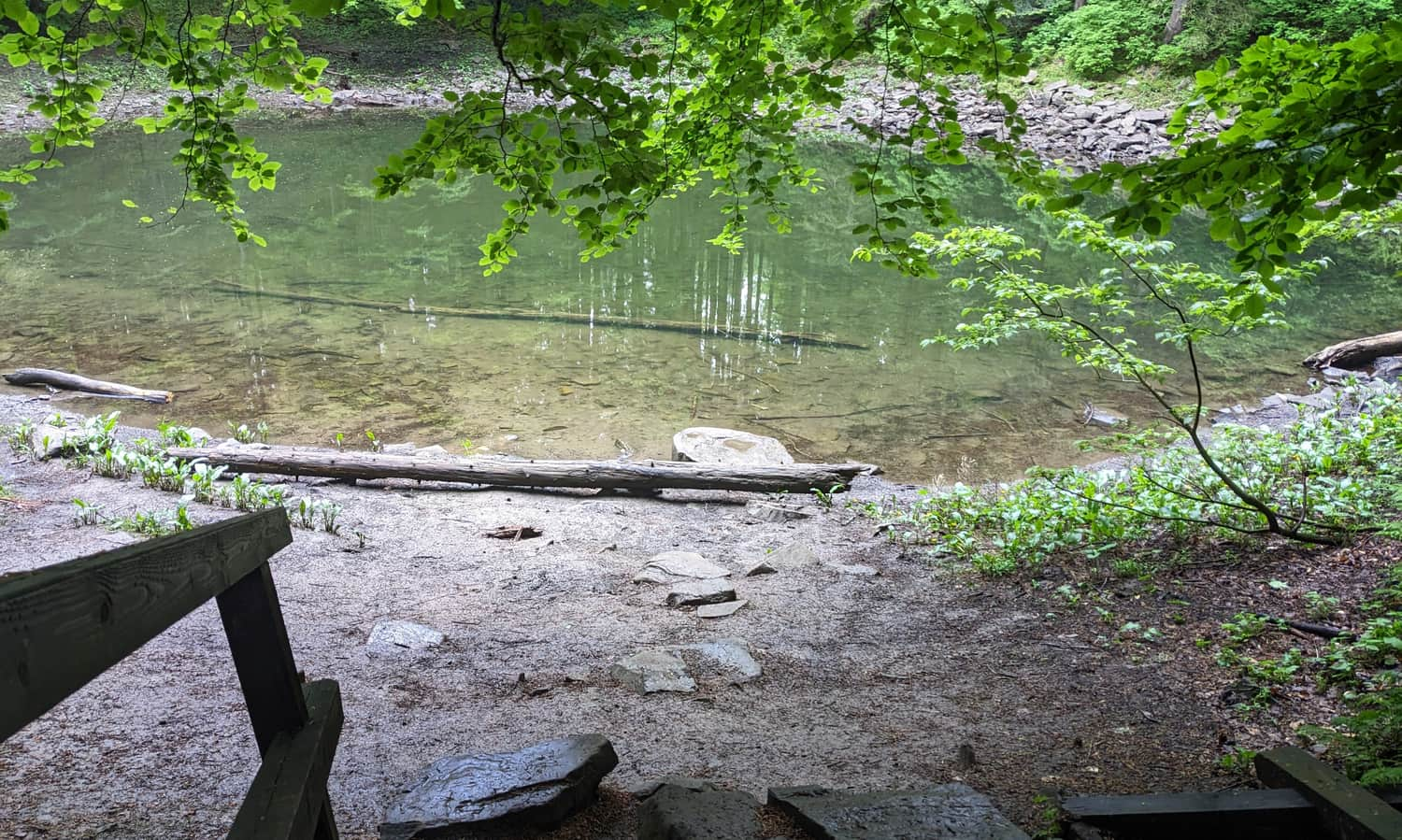
The northern, Polish slopes of Babia Góra are famous, among other things, for the numerous streams that flow from them. Where does so much water come from on the mountain? In ancient times, people explained it by assuming that there must be a huge underground lake inside the massif. According to these legends, Babia Góra was therefore a kind of "water volcano" that releases water streams instead of lava.
What is hidden in Babia Góra?
Apart from the underground lake, what else could be hidden in Babia Góra? Of course, treasures! One of the first conquerors of Babia Góra were medieval treasure hunters, searching for precious metals and minerals. They left behind mysterious signs carved on stones at the entrance to the Babia Góra caves and grottoes.
According to various legends, hidden underground or in secret caves, Babia Góra was guarded by dragons or a great rainbow snake wearing a royal crown - the serpent king. Although he had connections with impure forces and magical powers, he also had a sense of justice: he only gave treasures to honest and righteous seekers, while punishing the greedy and dishonest.

Babia Góra - treasures, bandits, and smugglers
It is a historical fact that the inaccessible slopes of Babia Góra were a perfect hiding place for Beskid bandits, and some of the Babia Góra caves were used by them. Is there anything left in them to this day? According to legends, there are plenty of bandit treasures!
The most incredible treasure of Babia Góra is said to be 13 barrels (12 filled with money, and the thirteenth with wine). Supposedly, they can be found on the steep slopes of Sokolica, and to reach them, one must open three doors: a stone one, an iron one, and a juniper one.
Other places where, according to legends, bandit treasures can be found on Babia Góra are:
- Golden Well - beneath the peak of Mała Babia Góra
- a complex of caves and crevices on Izdebczyska, the boulder fields below Kościółki, including Słowikowa Well and Bandit Grotto
- Brona Pass - where a pot with ducats was buried by a harnaś (mountain highlander) from Zawoja
More "contemporary bandits," that is, smugglers, also favored Babia Góra. Their secret path supposedly led through the so-called Tabakowy Chodnik (Tobacco Path) through the Jałowiecka Pass at the foot of the Babia Góra massif (the Zbójecki Chodnik (Bandit Path) passed through the Borna Pass to Półgóra, through a glade with the Bandit Table).
The real treasures of Babia Góra
No one knows if the bandit treasures are still in the caves of Babia Góra, guarded by dragons, snakes, or magic. However, the real treasure of the Queen of the Beskids is undoubtedly the extraordinary flora abundant in plants that have been attributed magical significance for centuries. Besides treasure hunters and bandits, it was herbalists and healers who were among the first to discover and conquer Babia Góra.
Healing properties were attributed to plants such as bear garlic, black elderberry, or common centaury. Poisonous plants like hellebore (protecting against wolves), spurge, and wolf's milk were used for magical purposes. The origin of the name of the elk thistle - a symbol of the Babia Góra National Park - is also shrouded in legend.

Supposedly, the elk thistle grows where a goddess - a magical being leading wanderers astray - sets foot. The goddess then guards "her flowers," and if there are many of them in one place, it means that they like to gather there and dance. According to the legend, a young boy did not believe in goddesses and to prove that they did not exist, he cut down a grove of elk thistle with an axe. As punishment, the goddesses turned him into... an elk! He could only be transformed back into a human by someone who loved animals more than their own life. This happened when one of the shepherdesses on the Krowiarki Glade saved him from a hunter's bullet.
Kościółki - the legend of the lost fortress on Babia Góra
One of the places on the ridge of Babia Góra has the unusual name "Kościółki" (Little Churches). The legend associated with this place follows a pattern known in many places in Poland and around the world. It is a story about a fortress punished for the misdeeds of its inhabitants.
The fortress, supposedly located at the western foot of the highest peak of Babia Góra, Diablak, was gradually engulfed by rocks as a punishment. It happened gradually: first, its lower parts were swallowed (apparently, the bell tower still protruded above the surface), then only the church cross remained, and in the end: bare rocks.
Today, it is said that in the vicinity of "Kościółki," strange sounds resembling the ringing of bells can sometimes be heard. Are they coming from underground or are they produced by the wind blowing through the rocky crevices and fissures?
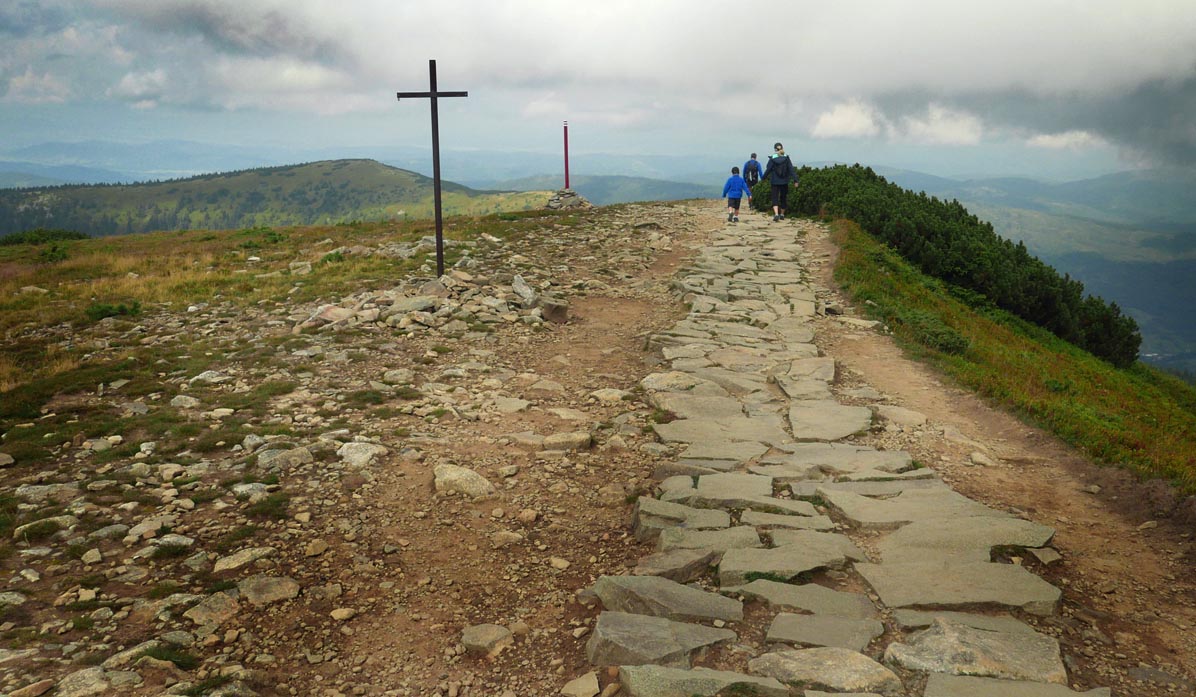
P.S. 1. Would you like to reach the summit of Babia Góra and personally explore the places described in the legends? We write about how to get here in this article:
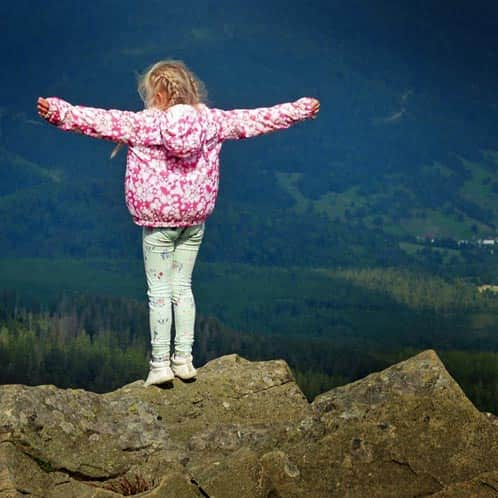
Babia Góra - all trails. For children and more
undefined ...
P.S. 2. Babia Góra is not only a treasury of fantastic legends and tales but also of quite serious (and true!) stories. Discover them in this article:

Babia Góra - Interesting Facts and Curiosities
Discover fascinating facts about Babia Góra: Babiogórskie records: the "most" and "number one" and historical facts related to conquering its summit over the centuries. ...
