Gliwice Radio Station – the tallest wooden tower in Europe
Tarnogórska 12944-102 Gliwice
check_circle In a room
check_circle Outdoors
check_circle Flat roads, no inclines
check_circle Mainly in the sun
check_circle Access by public transport
Gliwice Radio Station – the tallest wooden tower in Europe
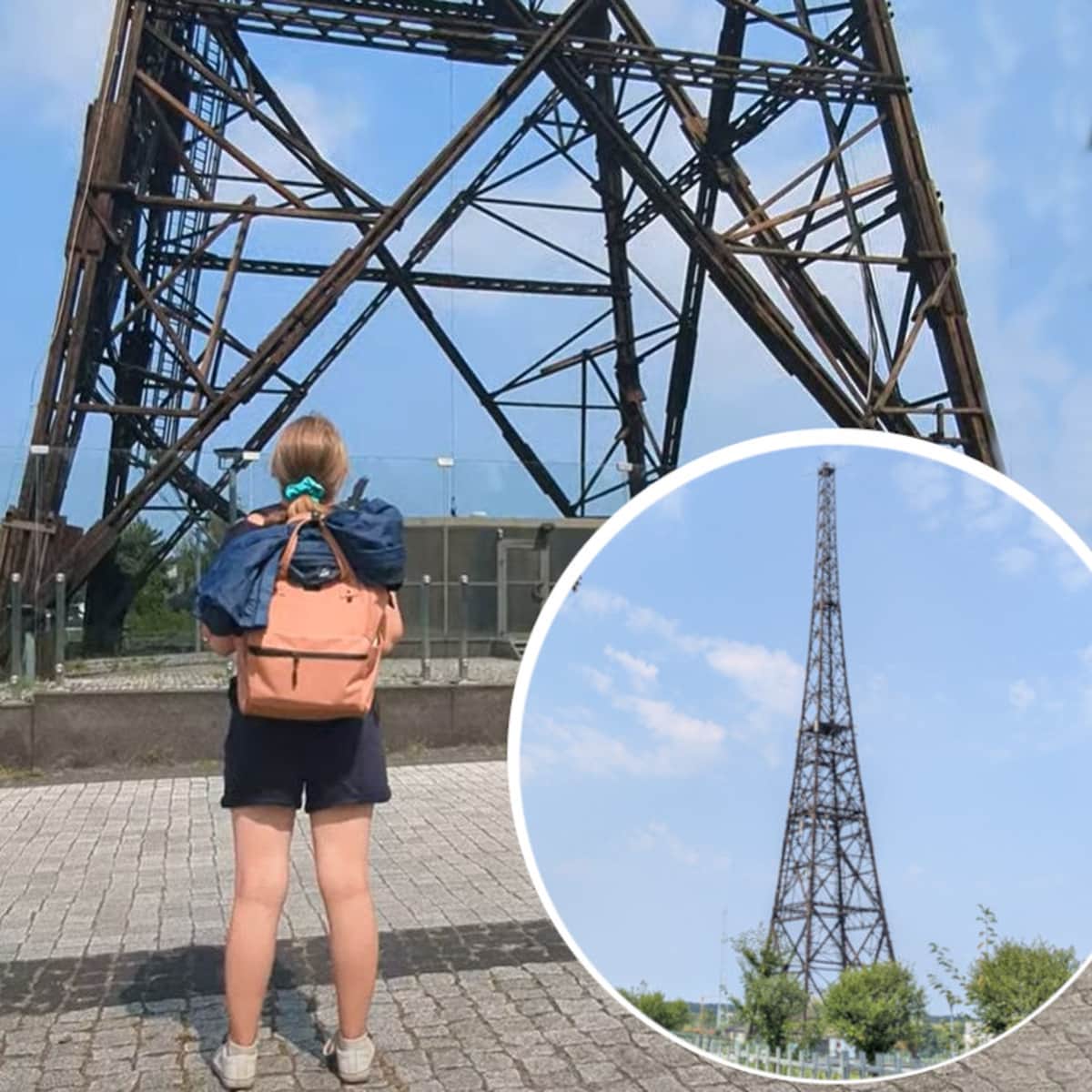
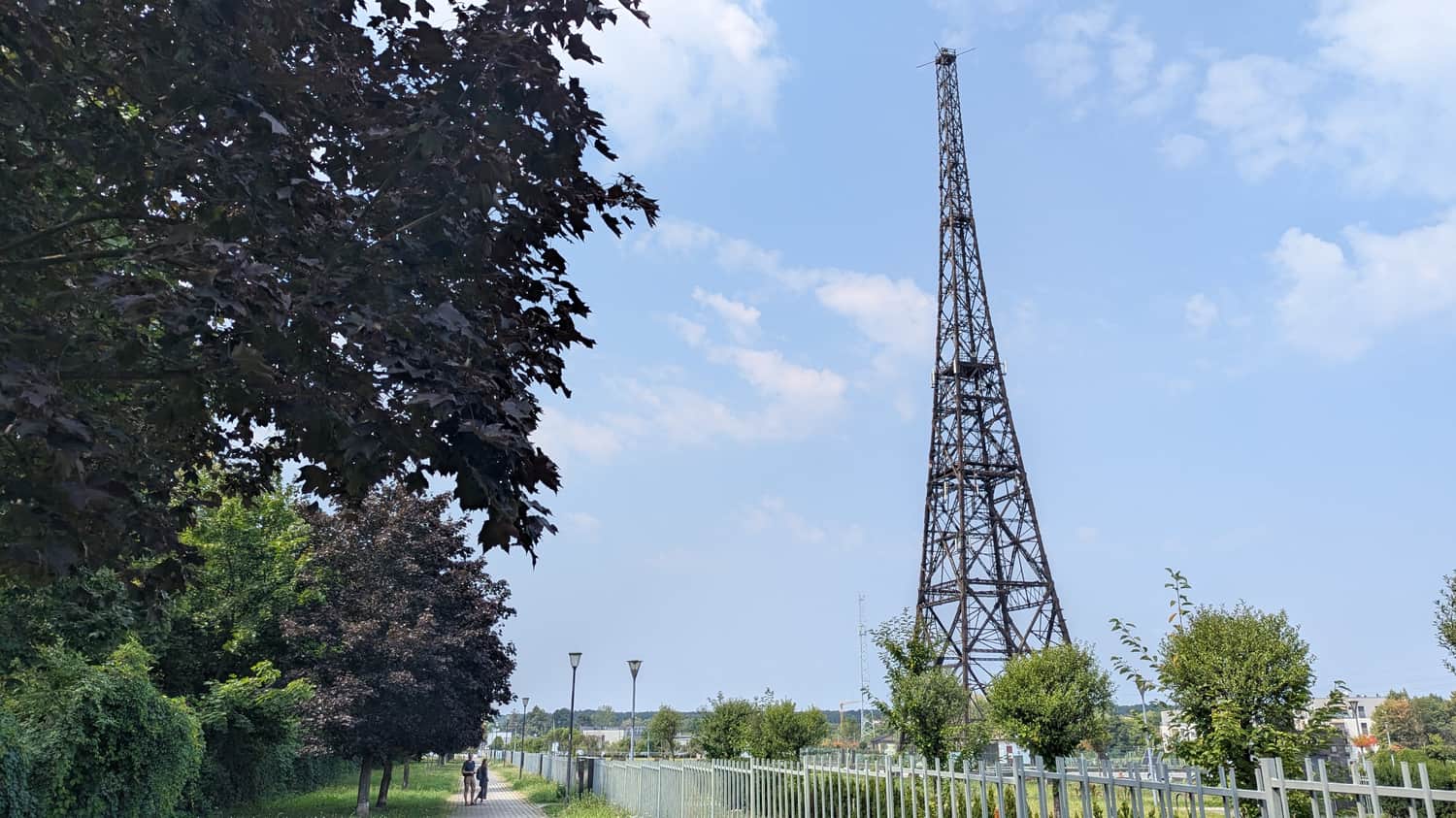
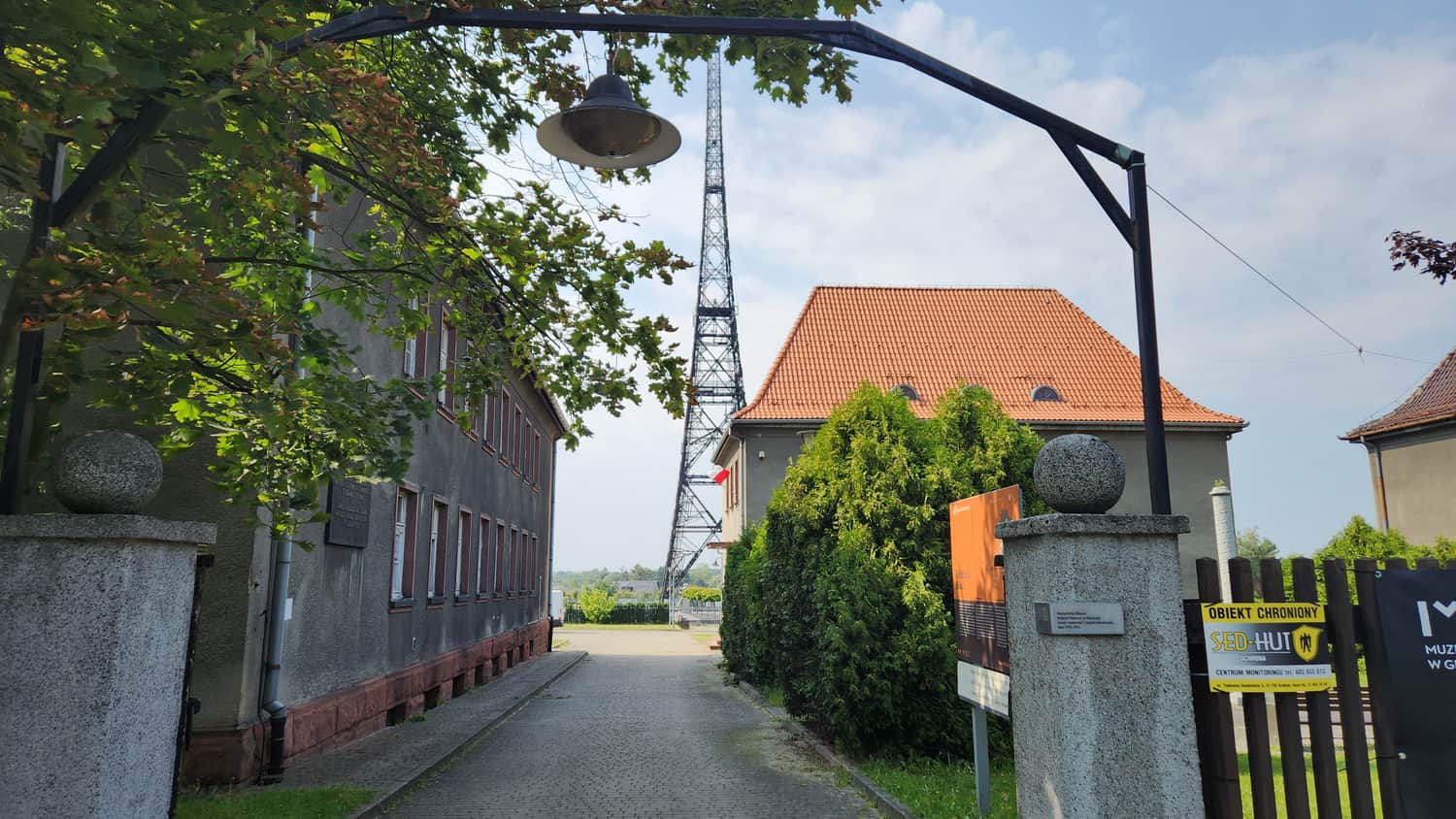
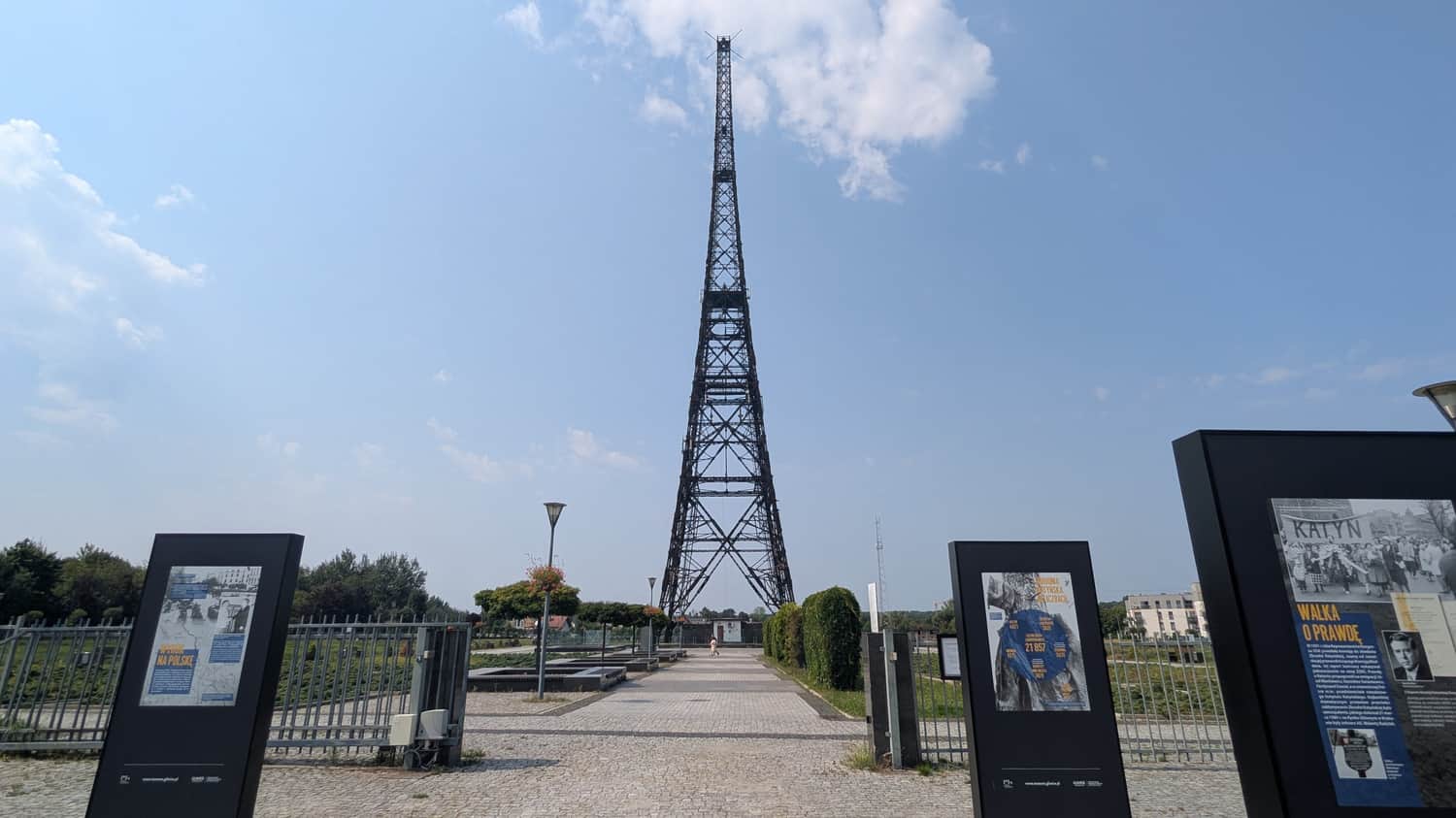
The Gliwice Radio Station is a unique place to visit in Silesia, in the city of Gliwice in southern Poland (near Katowice). This 111-meter (364 ft) wooden antenna tower is one of the best-known symbols of Upper Silesia and a living history lesson. It was built from treated Siberian larch, with parts connected by brass bolts — without a single steel nail!
- Plan about 60–90 minutes for your visit: enough time for a walk, photos, and the transmitter building.
- The area around the tower is open and free. The museum inside the transmitter building is open on weekends; hours vary by season — check the museum’s website for current times.
- Museum entry is free on Saturdays.
- During the visit, a short film (about 20 minutes) about the Gliwice provocation is shown. The film may be in Polish; ask staff about subtitles or materials in English.
- There is a large free parking lot next to the radio station.
The wooden giant: how it works and why wood?
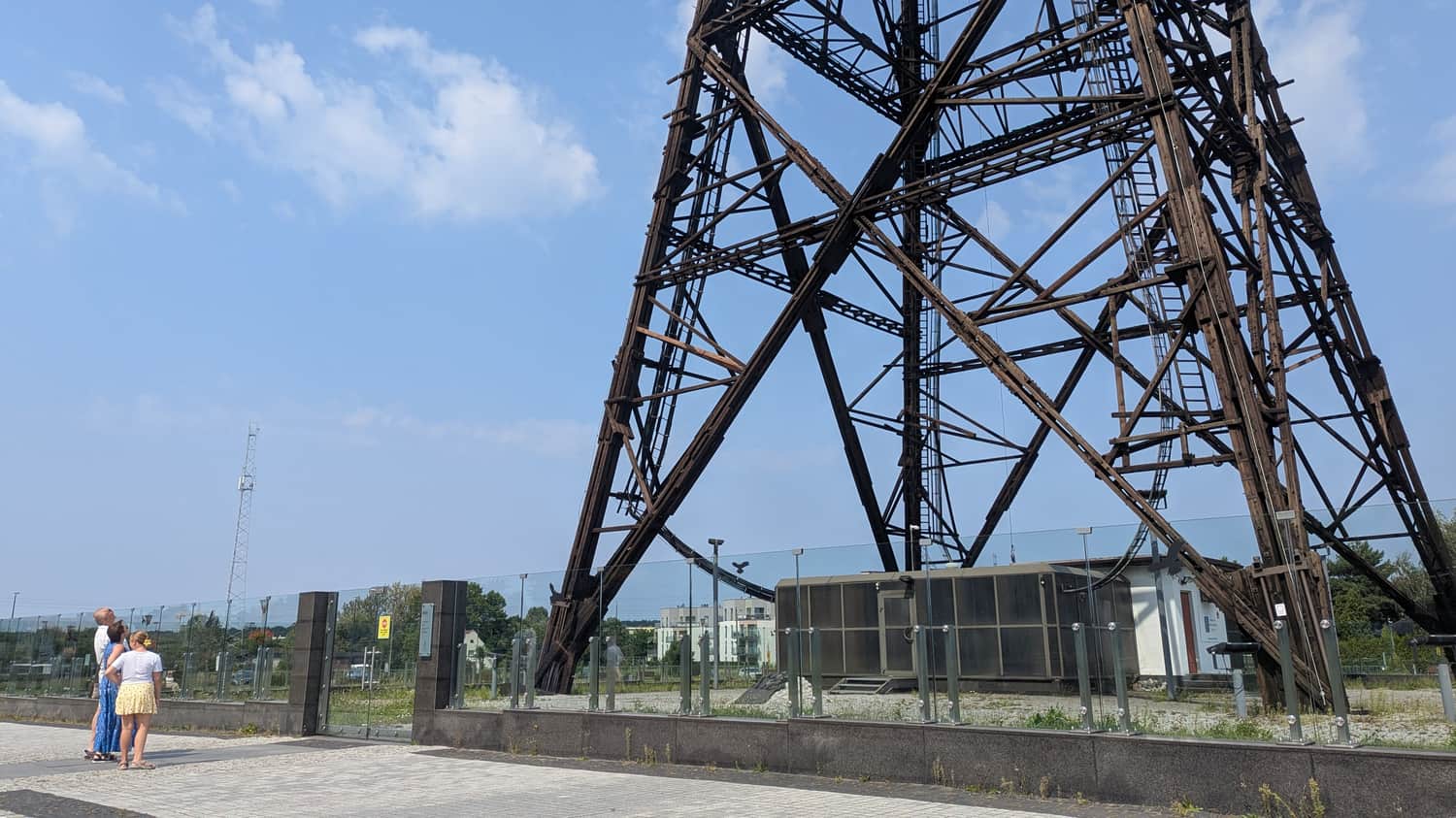
Wood is a dielectric, so it does not disturb the electromagnetic field — perfect for antenna structures. The tower is made from treated larch beams bolted together in a dense grid. Inside there is a ladder with 365 steps leading to service platforms. This seemingly delicate frame has survived decades of strong winds, frost, and heat.
Visiting the transmitter building
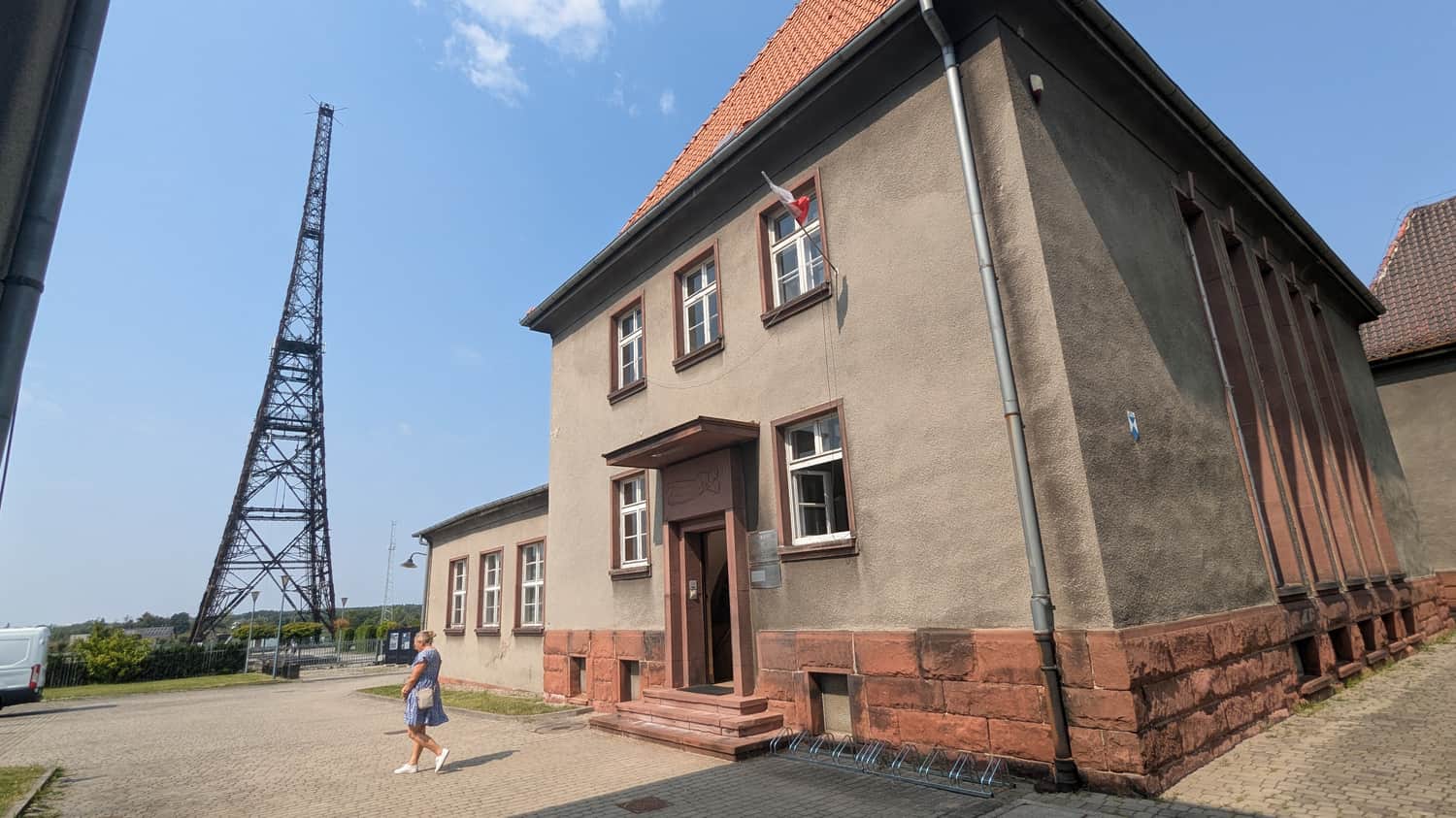
The station was built in 1935, when Gliwice was a German city near the border with Poland. It was a modern broadcasting center and relayed the program of the Wrocław station (Reichssender Breslau). At night, the signal from Gliwice reached far beyond the region — it was heard across Europe, parts of Asia, and even North America.
From the mid-1950s, the site was also used to jam Polish-language broadcasts from the West, such as Radio Free Europe. Today, the former transmitter building houses a branch of the Museum in Gliwice, and the tower serves as a mast for modern antennas.
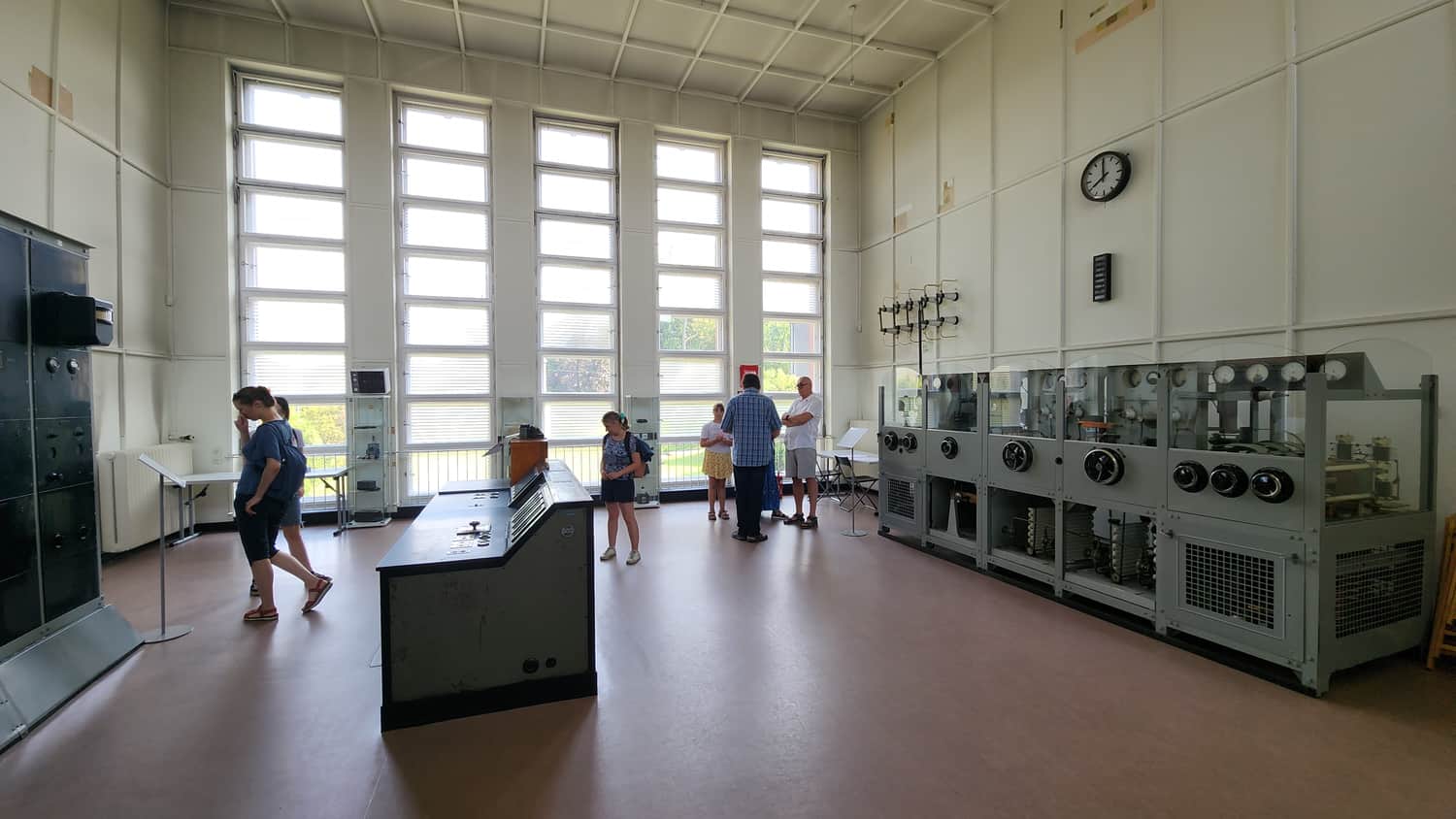
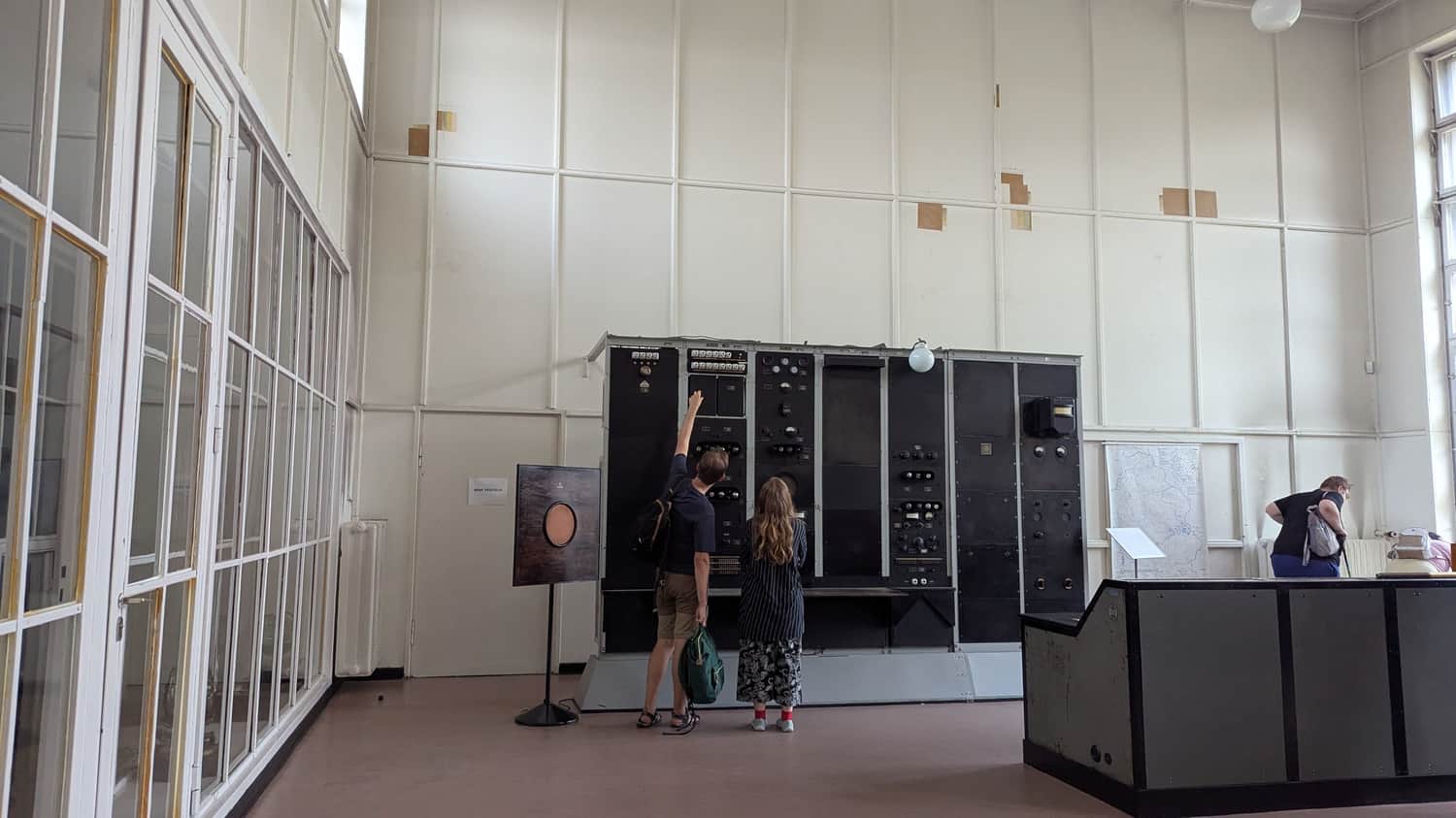
You will not hear the hum of radio tubes anymore, but the rooms look as if the engineers have just stepped out for a break. In the museum you can see original 1930s broadcasting equipment:
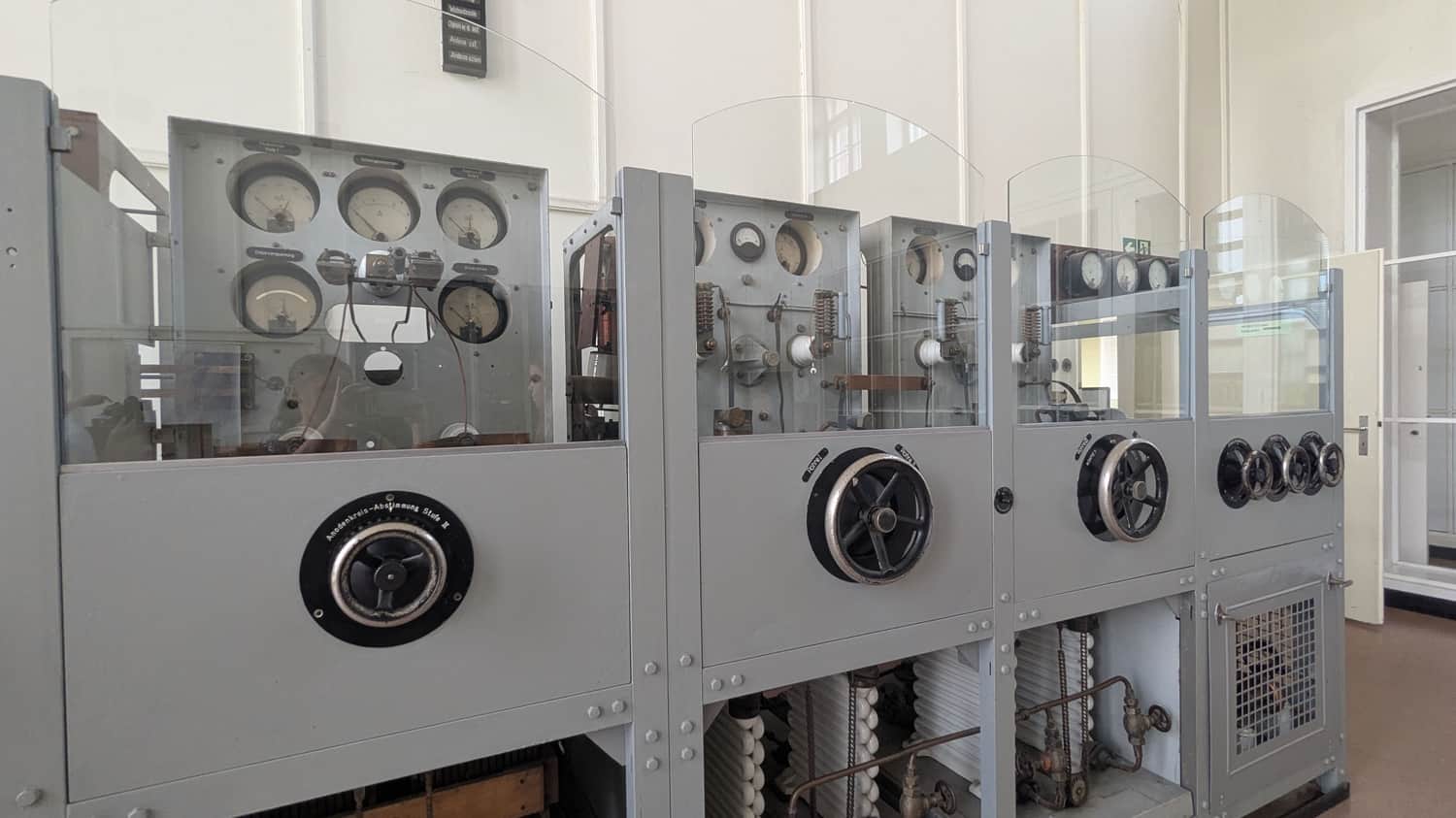
- Huge medium-wave transmitters — massive steel cabinets full of vacuum tubes, transformers, and switches.
- Control panels with clocks, meters, and indicator lights
- Radio links and support equipment that sent the signal from Gliwice out into the world.
- Huge transformers and a water-cooling system — showing how much power the transmitter needed.
The Gliwice provocation – the voice that changed the course of history
On 31 August 1939, German special services carried out a staged attack at the Gliwice Radio Station — the so-called Gliwice provocation. A group of SS officers disguised as Poles entered the building and broadcast a short message in Polish to create the impression that Poles had attacked German infrastructure. The next day, Nazi propaganda used this as a pretext for aggression against Poland.
The broadcast message was very short. In Polish sources it is often called the "nine words", commonly quoted in English as: "Attention! This is Gliwice. The radio station is in Polish hands!" The transmission lasted only a moment, but its propaganda impact was huge.
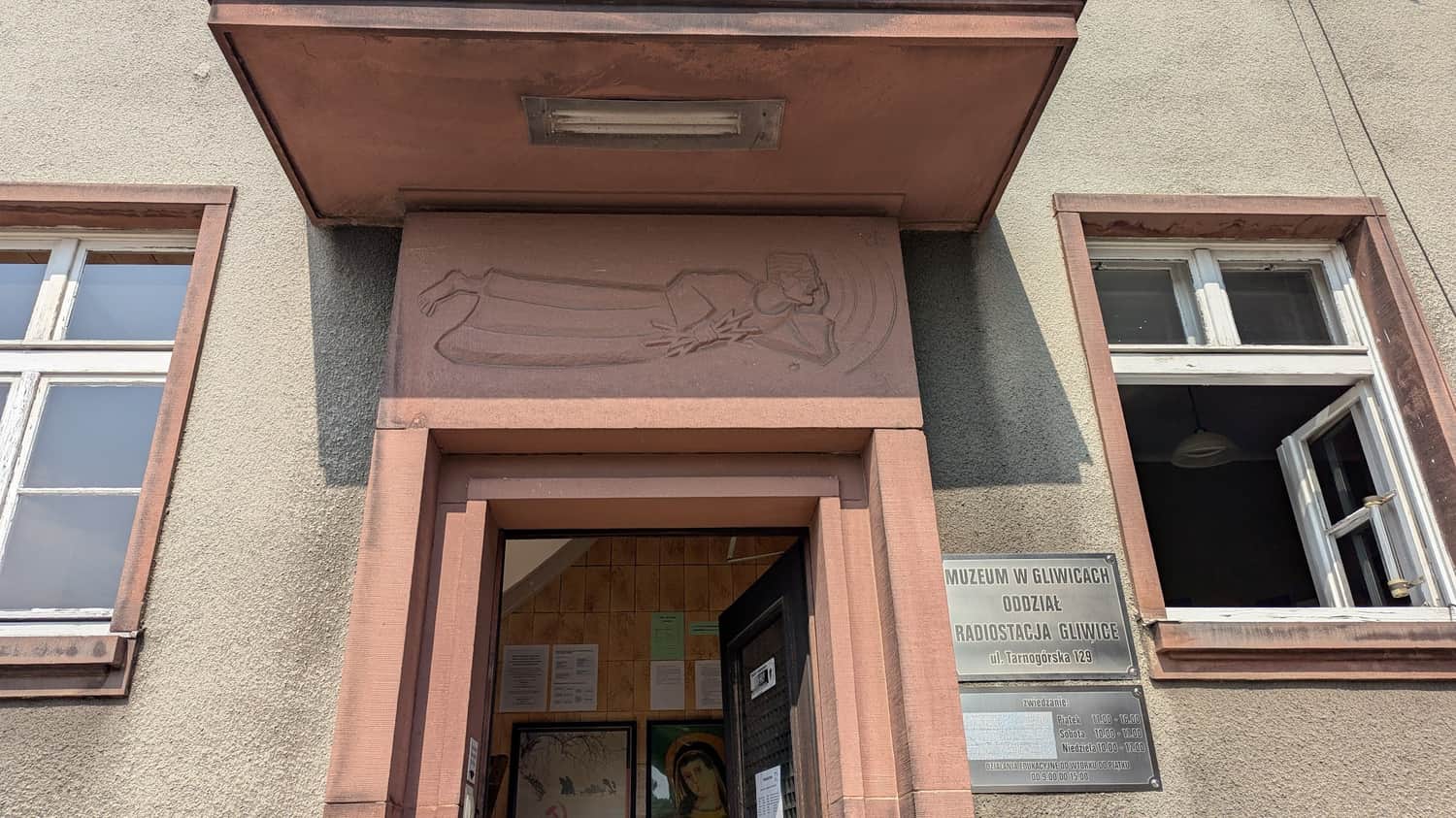
Relief above the museum entrance
Above the entrance to the transmitter building there is a relief carved in red sandstone. It shows Jupiter, the Roman god of the sky, storms, and rain (often identified with the Greek Zeus). He holds lightning in his right hand and listens to radio "waves". The sculptor was probably the German artist from Gliwice, Hanns Breitenbach.

Publish Date:
More in the Region Śląskie (Silesian Voivodeship)