African Museum, wickerwork exhibition, and mineral collection at the City Culture Center in Olkusz
Szpitalna 3232-300 Olkusz
check_circle In a room
Close to the Main Square (Rynek), inside the City Culture Center (MOK) in Olkusz, southern Poland (between Krakow and Katowice), you can visit three special exhibitions:
1. African Museum in Olkusz
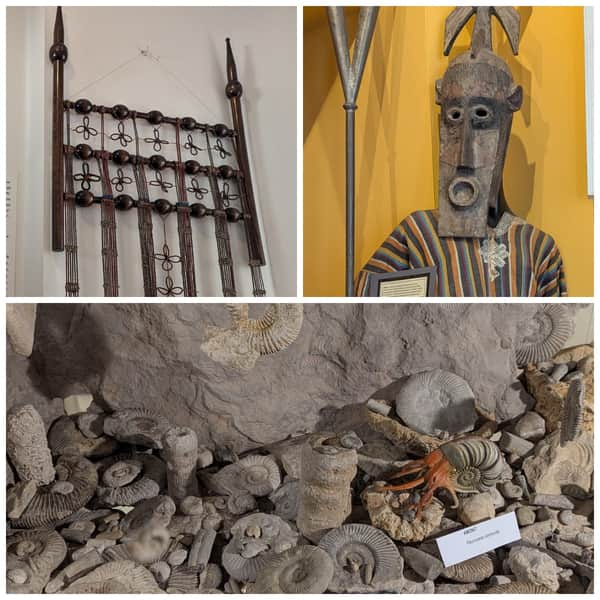
The museum opened in 1971, based on the collection of a local traveler and other donors. Most objects come from West and Central Africa, including from Tuareg, Dogon, Bambara, and Bushongo communities.
In the museum you can see:
- Everyday objects such as dishes, tools, and household items used in communities across Africa.
- Ritual masks linked to religious ceremonies and traditional practices.
- Traditional clothing and toys that show daily life and ceremonies.
- Musical instruments, weapons, amulets, and jewelry.
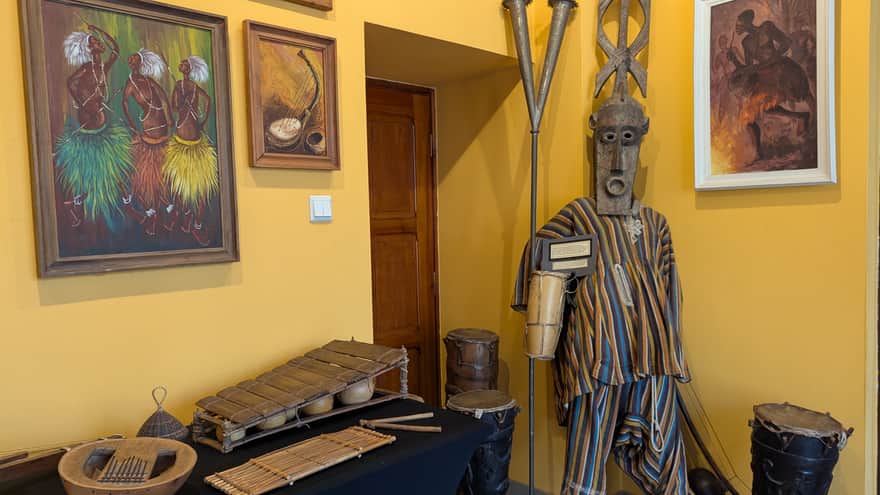
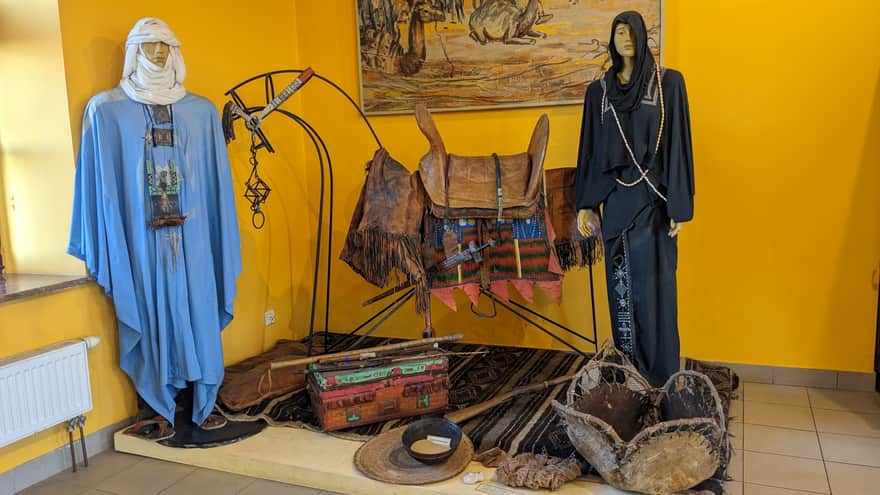
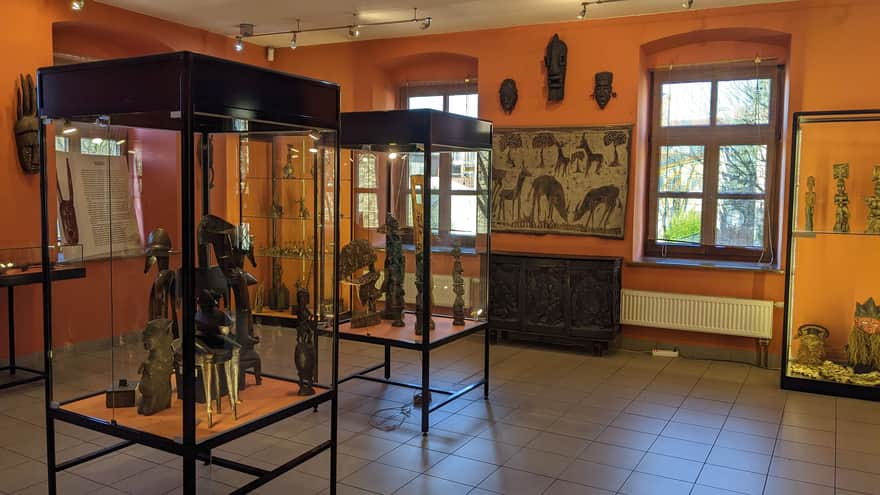
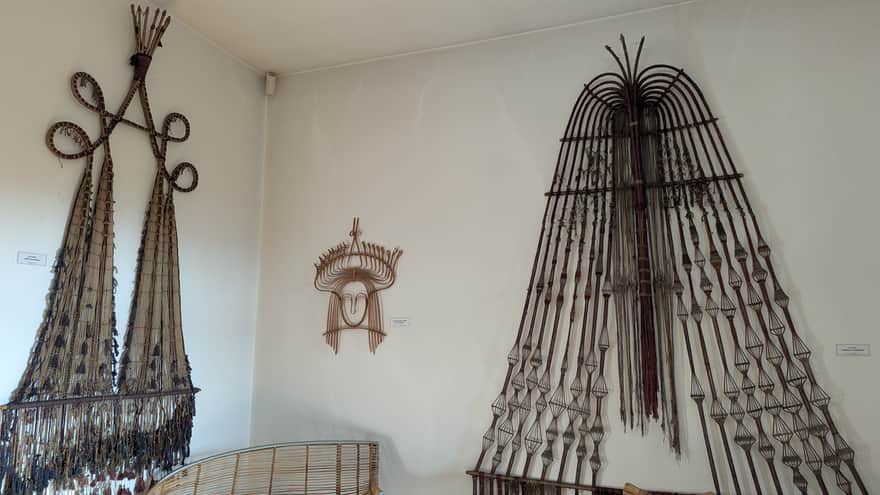
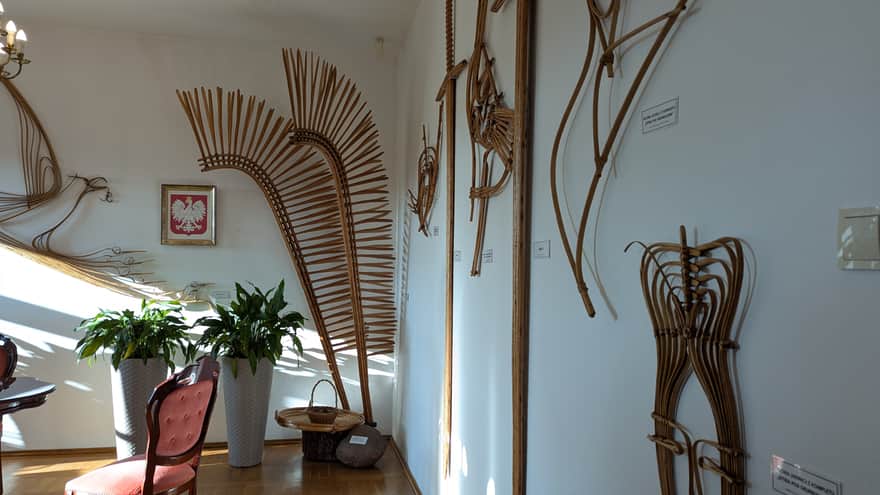
2. Wickerwork Exhibition (Wladyslaw Wolkowski)
As part of the MOK display, there is also an exhibition of works by Wladyslaw Wolkowski, known as the "Michelangelo of wicker". It presents wicker and reed creations—unique furniture, chairs, tables, baskets, fruit stands, and other useful items with original design.
You will also see unique "strojence polskie"—colorful wall hangings and kilims, richly patterned woven textiles (traditional Polish decorations).
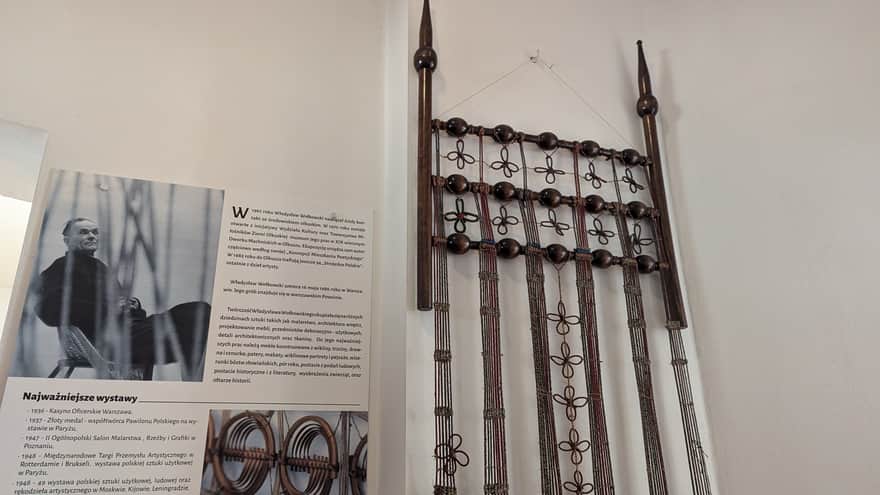
3. Minerals of the Olkusz Region and Fossils of the Krakow-Czestochowa Upland (Polish Jura)
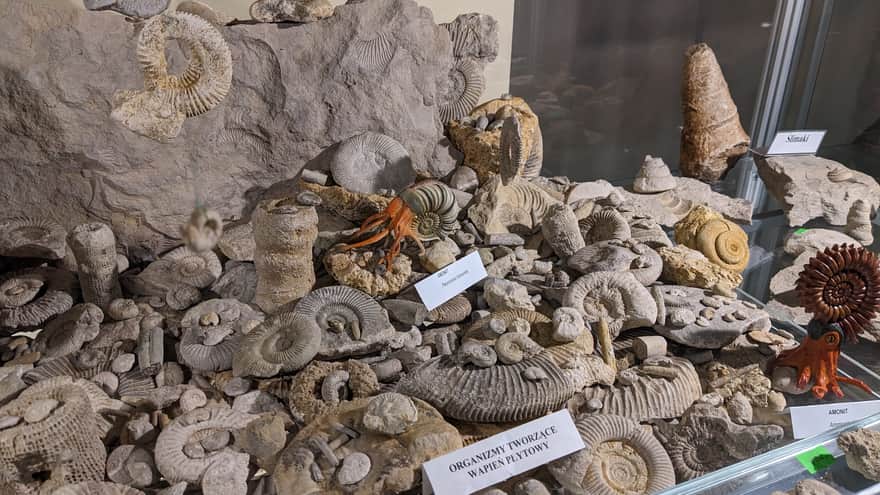
The history of Olkusz, called the "Silver Town", has long been linked with mining ores—zinc, lead, and silver. The exhibition shows several thousand minerals from the Olkusz area, including zinc, lead, and silver ores, as well as colorful forms of galena, sphalerite, and marcasite.
A large part of the display features fossils from the Krakow-Czestochowa Upland (Polish Jura)—sponges, bivalves, corals, brachiopods, sea urchins, trilobites, and parts of larger organisms. You can see ammonites of impressive size, almost half a meter in diameter.
The exhibition was created thanks to the passion and donations of local collectors and is one of the richest collections of this type in the region.
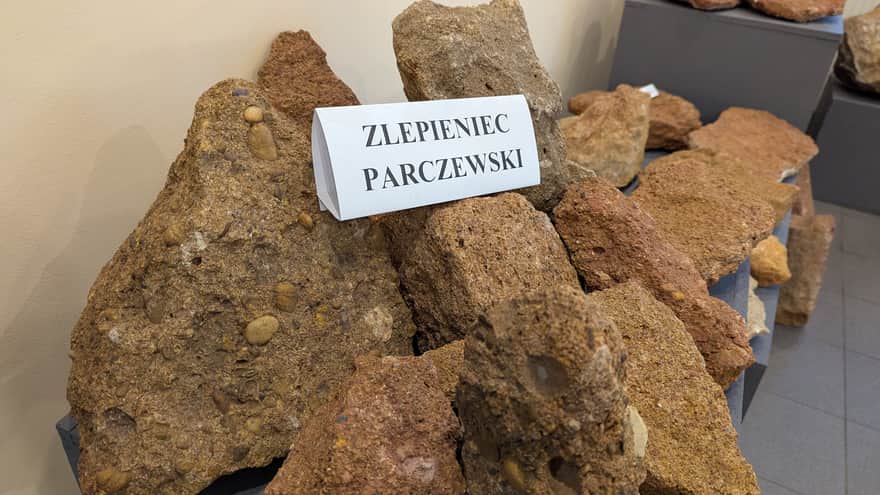
A highlight is the Parczew conglomerate (Polish: "zlepieniec parczewski")—a unique, rusty-red stone characteristic of Olkusz, quarried for example around Parcze Street. It was and still is used to build monuments such as city walls, churches, and portals, and it remains an important symbol of the town.

Publish Date:
More in the Region Okolica Krakowa (The Surroundings of Krakow)