The Church of Peace in Jawor - an unusual church made of wood and clay, built in one year
Park Pokoju 259-400 Jawor
check_circle In a room
A huge church made of wood and clay
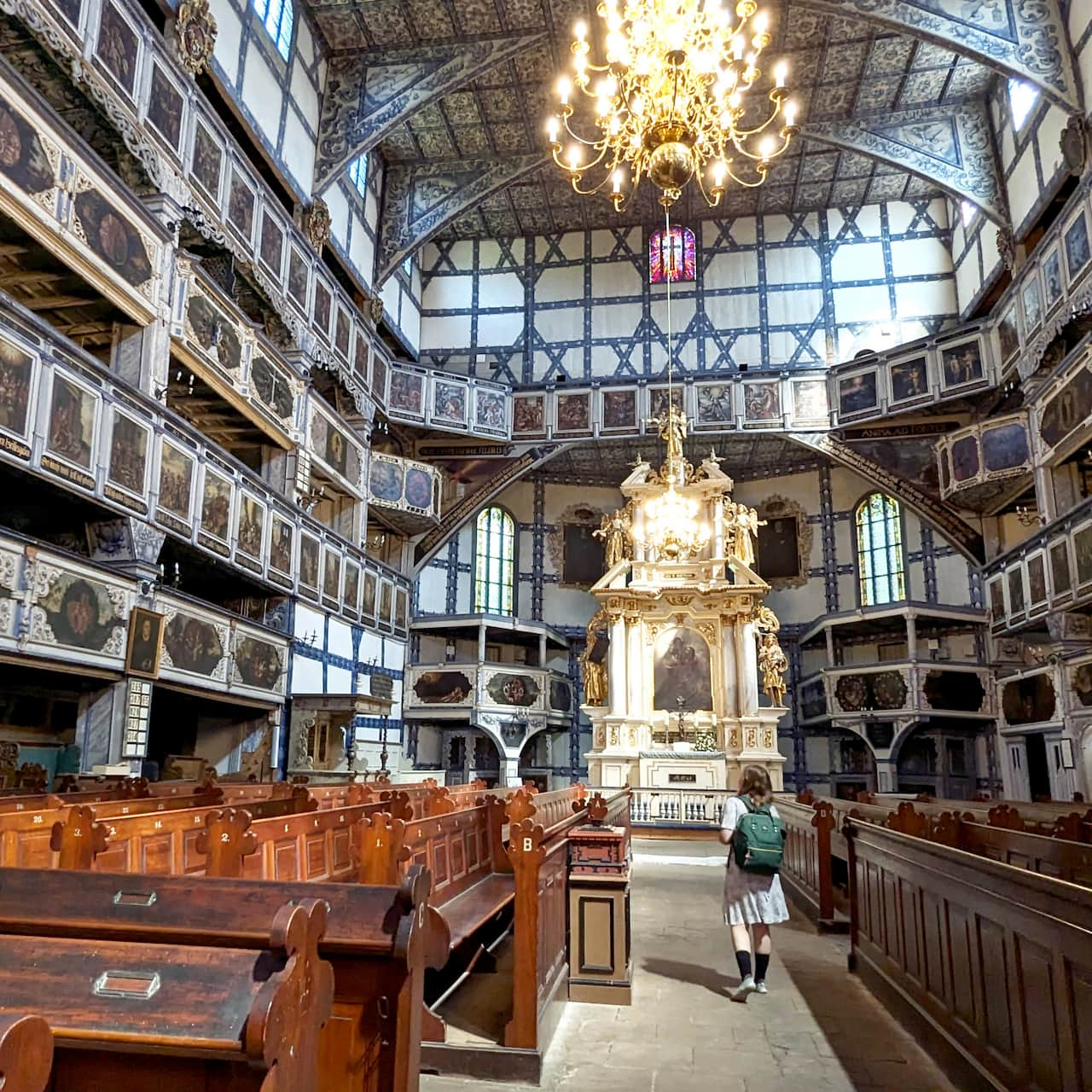
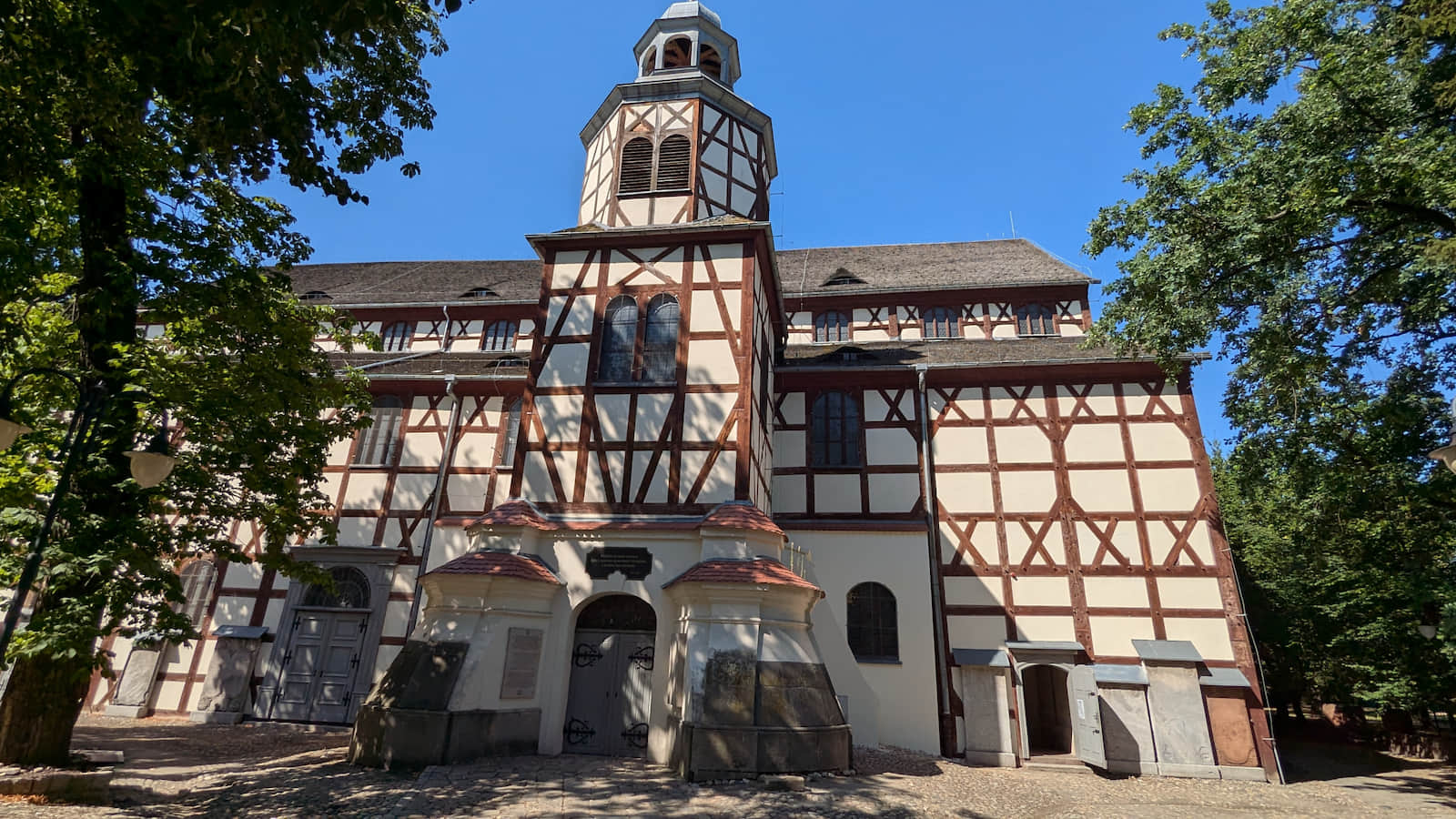
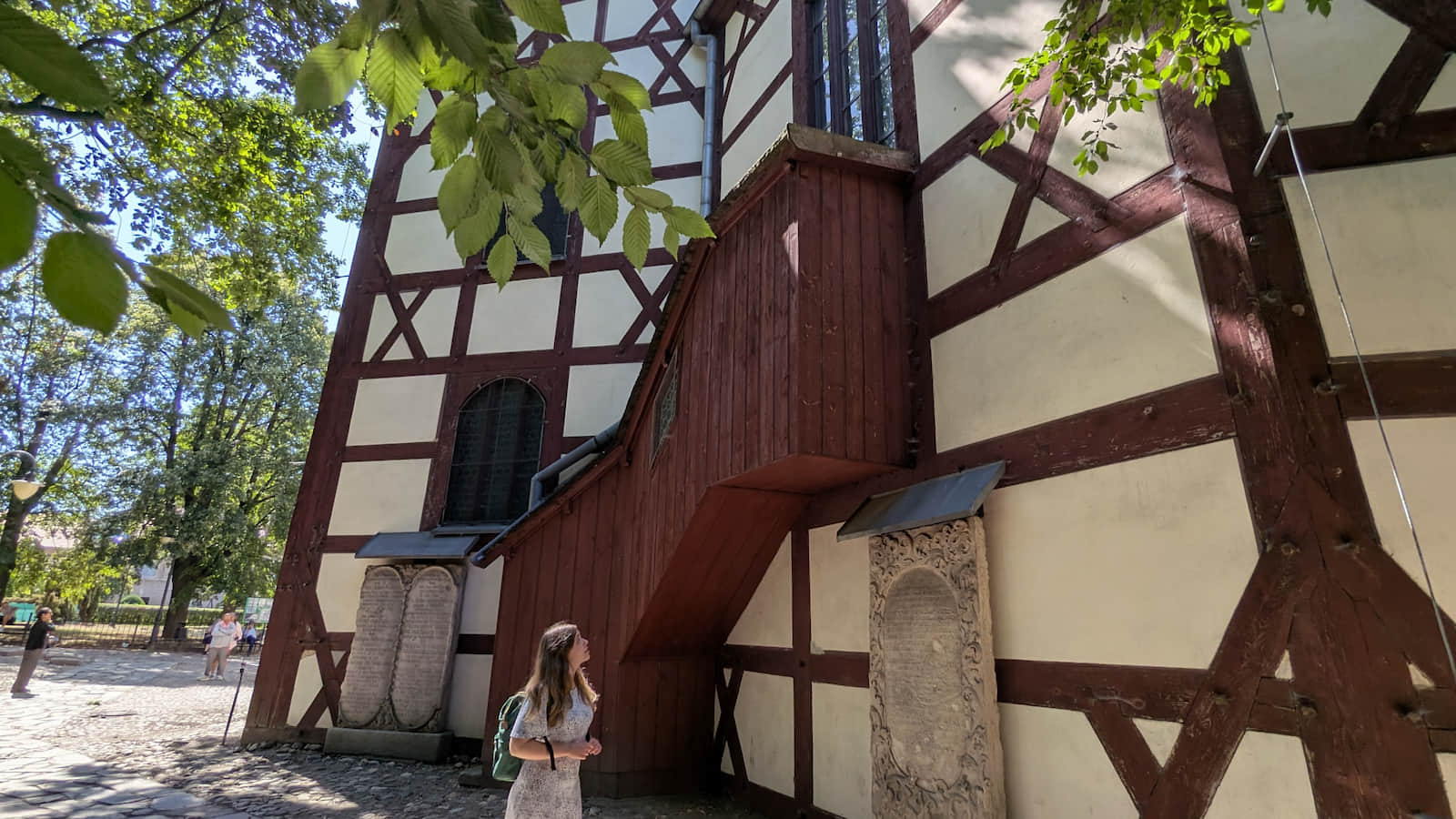
The Evangelical Church of Peace is in the town of Jawor in Lower Silesia, about 27 kilometers from Legnica. It is impressive because of its huge size and rich interior. Its history is as interesting as its architecture. The church was built as a compromise between the emperor and the Silesian Protestants. According to strict rules, it had to stand outside the town walls and it could not be built with brick or stone. It was made mainly of wood and clay, and the builders had only one year to finish it.
This makes it even more impressive that this unusual wooden building has survived for more than 350 years. The church was made from materials that were considered weak, but it still exists today and is still used as a church. Today it is one of the most important historic monuments in Lower Silesia and, together with the Church of Peace in Świdnica, it is on the UNESCO World Heritage List.
Why were the Churches of Peace built?
To understand the history of this church, you need to go back to the 17th century.
The Thirty Years' War lasted from 1618 to 1648. It was one of the most tragic conflicts in European history. The war was partly religious, with Catholic and Protestant countries and communities fighting each other. After the war, life was very difficult for Protestants in areas ruled by the Catholic Habsburgs. Evangelicals lost many of their churches and could not freely hold services.
After the war, the Peace of Westphalia allowed three Evangelical churches to be built in Silesia. They were built in Jawor, Świdnica, and Głogów. However, the emperor's permission came with very strict rules. The churches had to:
- be built outside the town walls,
- be built from temporary materials, mainly wood, clay, and straw,
- be finished within one year
Only two of the three 17th-century Churches of Peace have survived to this day: the ones in Jawor and Świdnica. The church in Głogów burned down in 1758.
Multi-level galleries
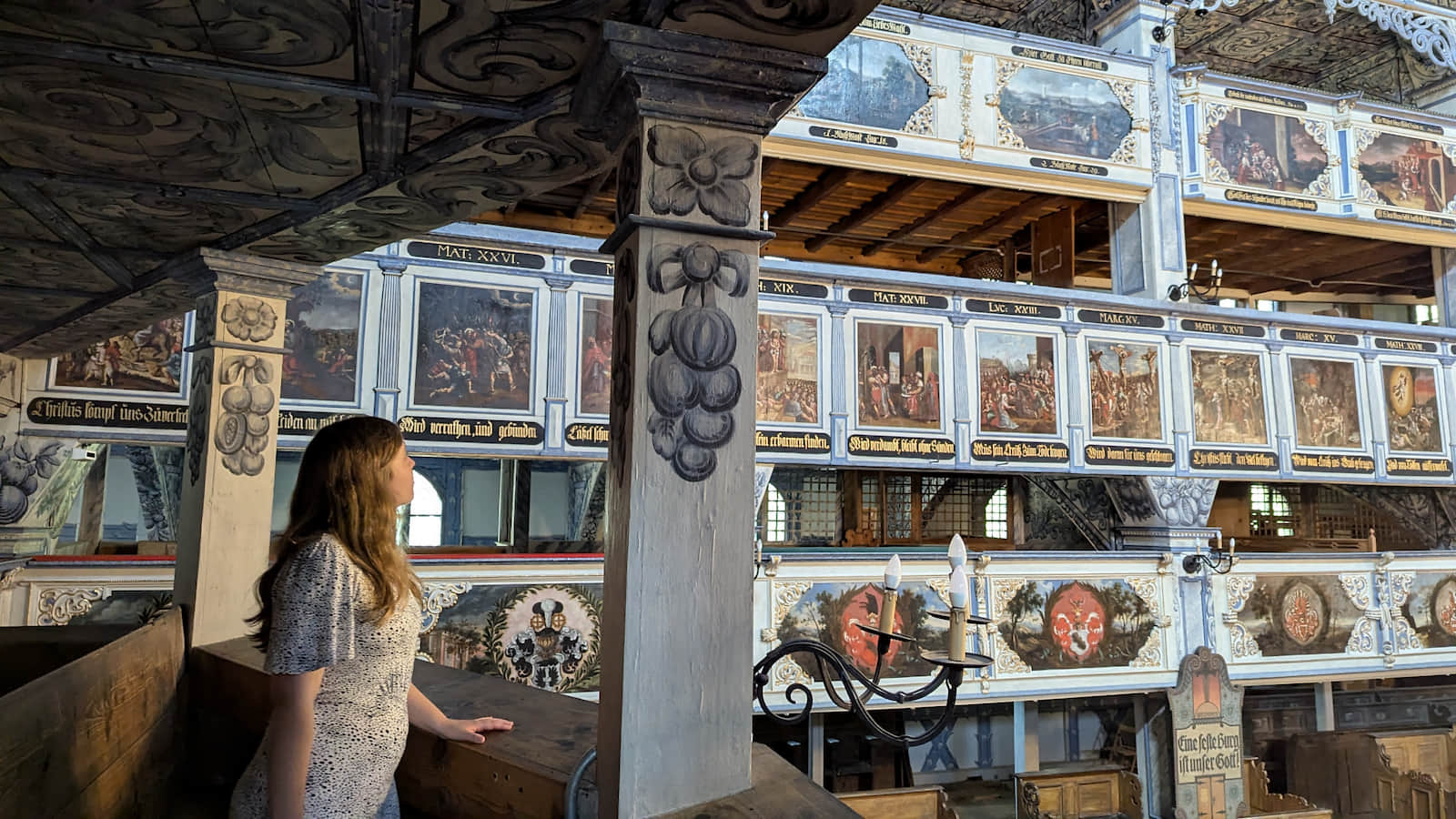
The church was built on a rectangular plan. It is about 16 meters high and more than 40 meters long. Its large interior could hold about 6,000 to 7,000 worshippers.
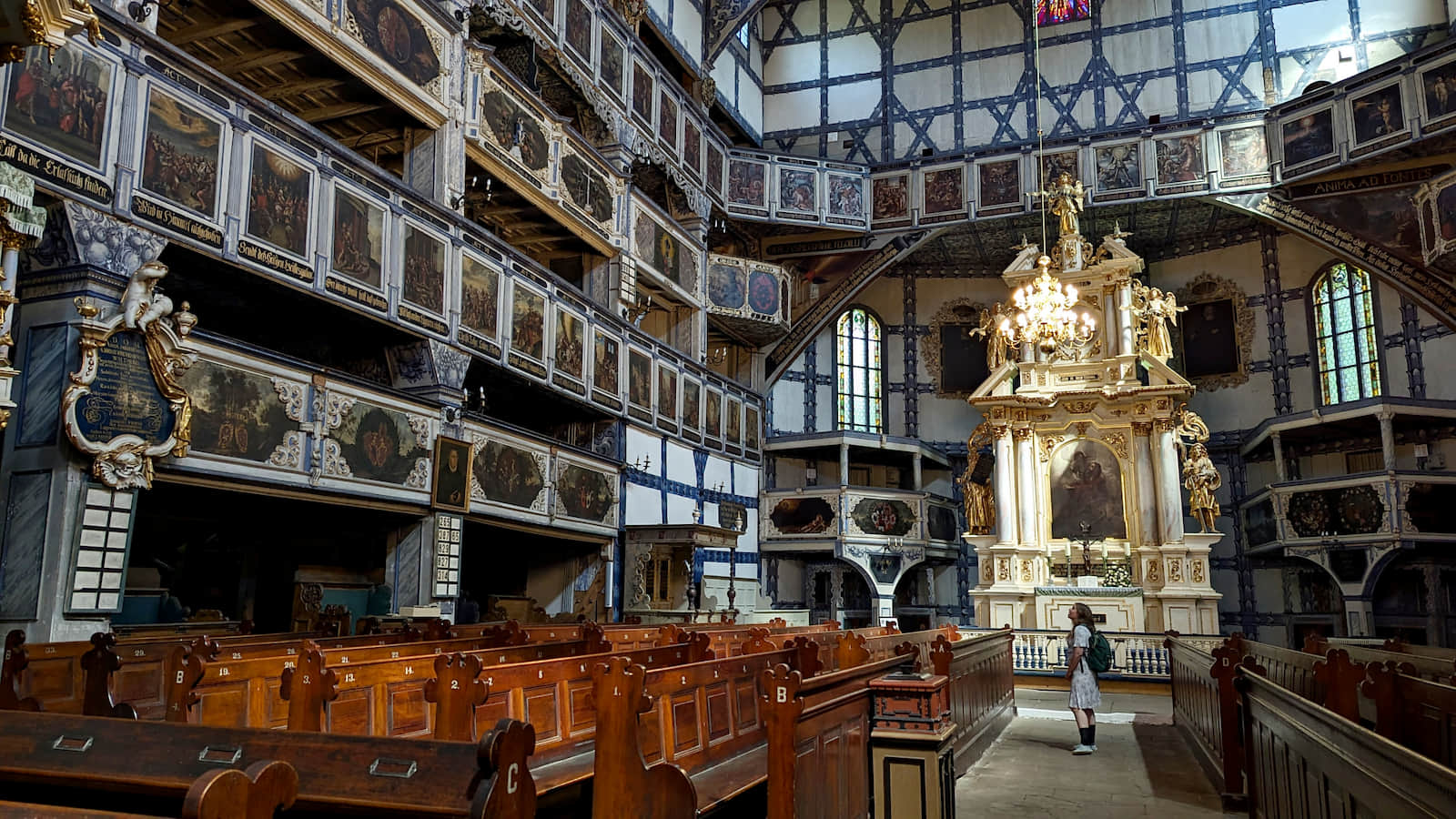
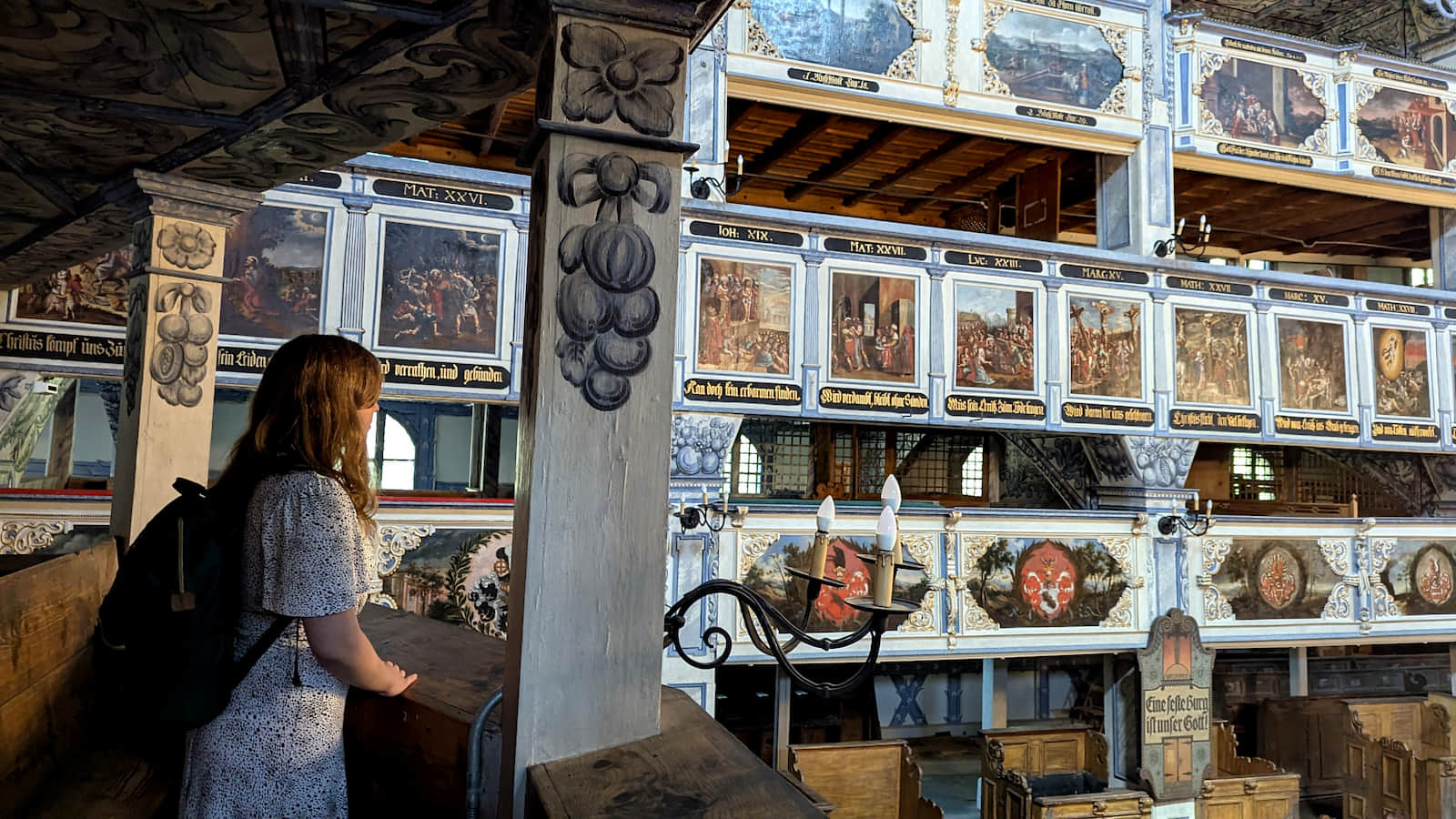
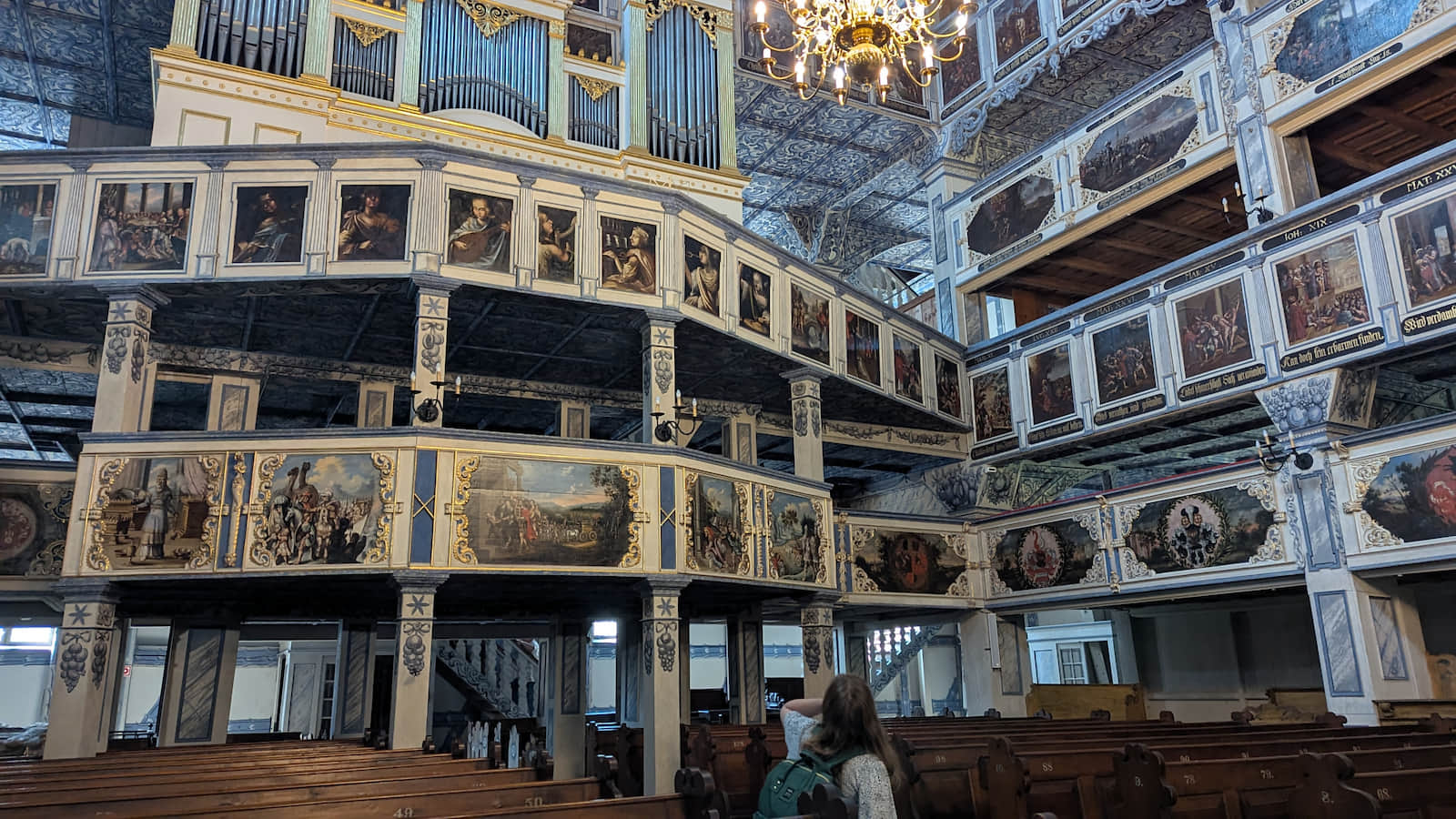
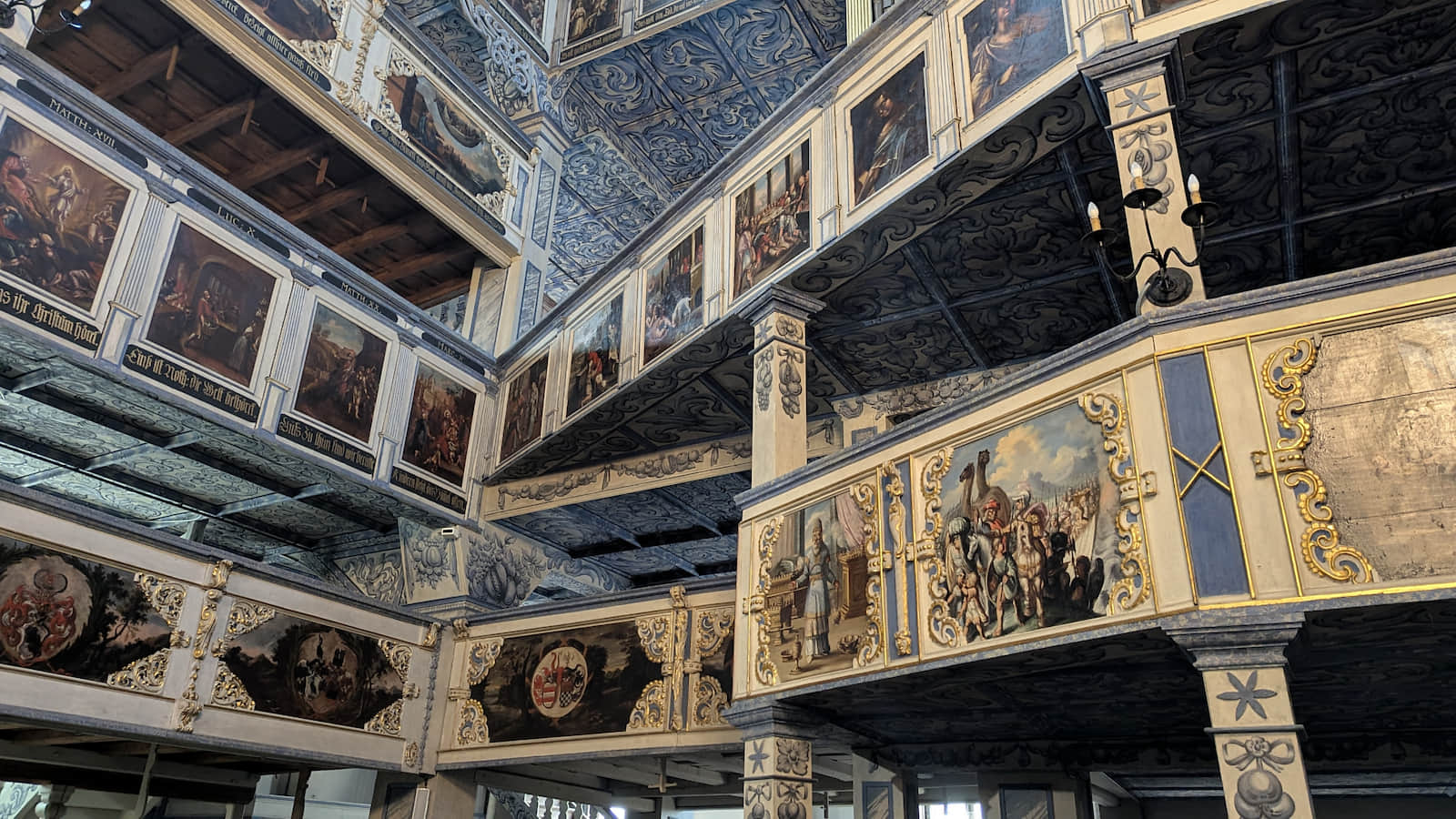
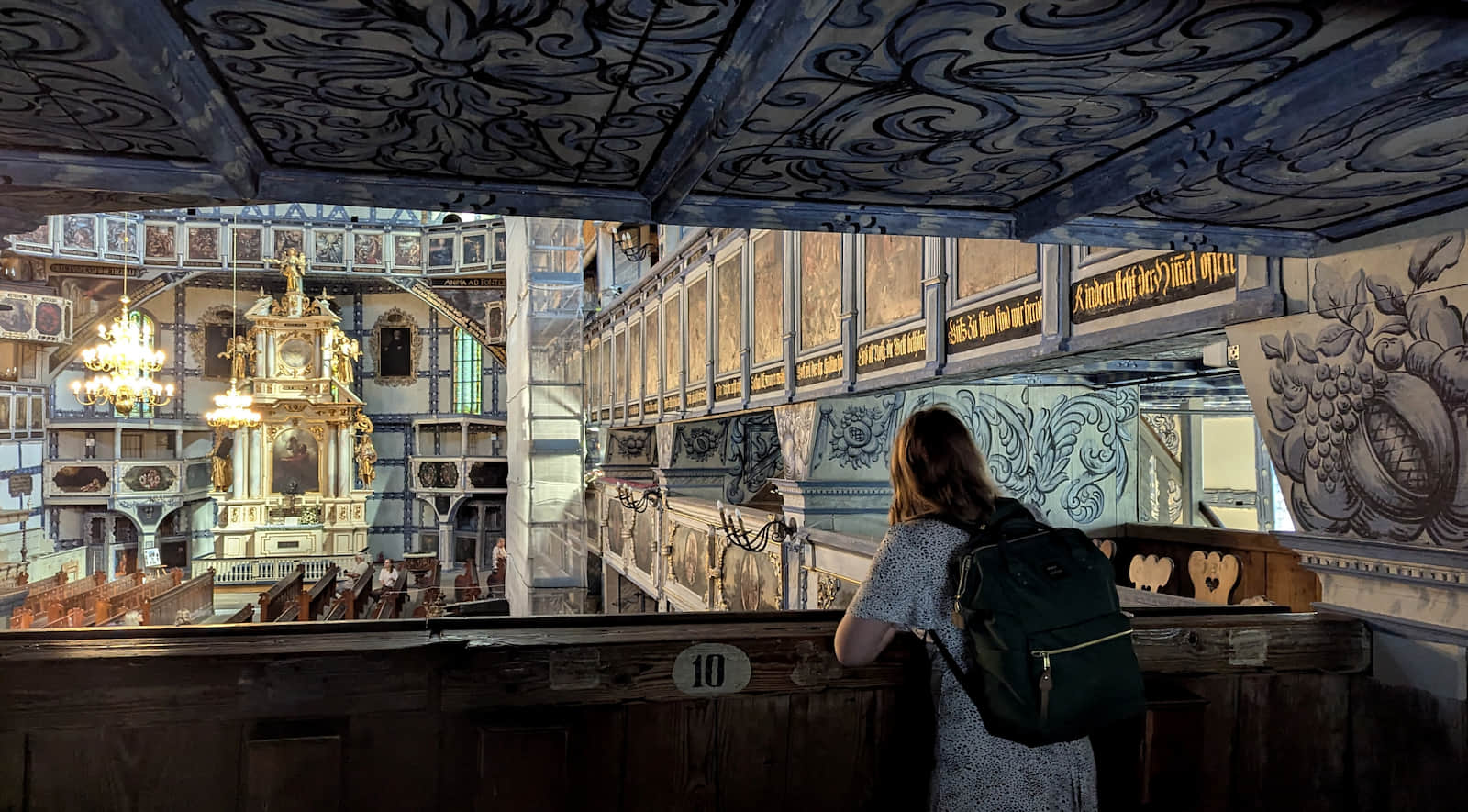
To make space for so many people, the inside of the church has several levels of galleries. These galleries were made for worshippers and are richly decorated with hundreds of paintings. They show, among other things, Bible scenes, noble family coats of arms, views of castles, and symbols of craft guilds.
Without a doubt, the galleries are one of the most impressive things to see when visiting the Church of Peace.
A richly decorated interior
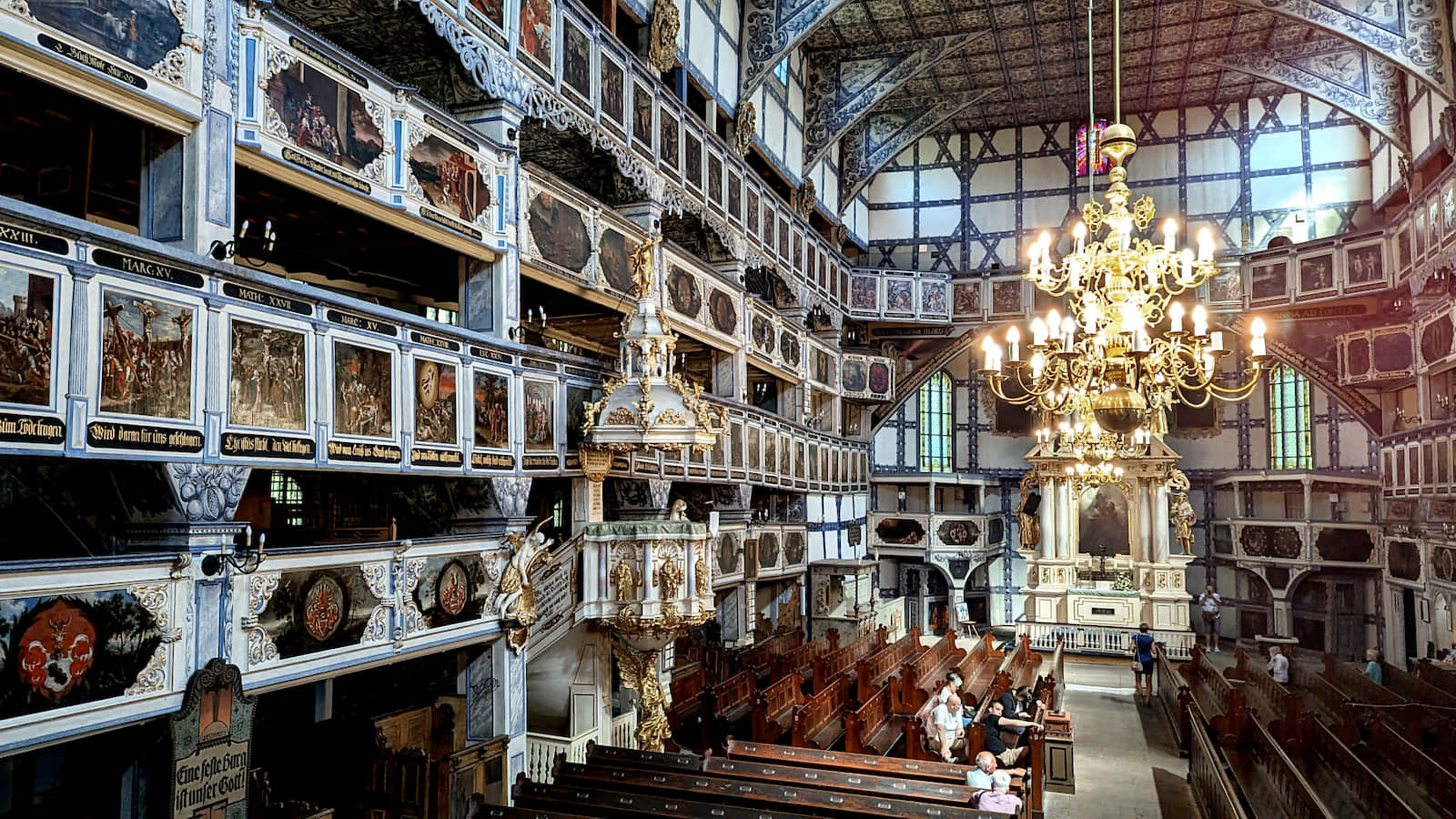
Although the church was supposed to be a simple and temporary building, its interior became very rich over time.
The furnishing of the church took more than 100 years. In the following decades, altars, a pulpit, a baptismal font, organs, benches, and painted decorations were added. Today, the interior is one of the best examples of Protestant church architecture combined with rich Baroque decoration.
The church also has a wooden baptismal font from 1656. It is one of the oldest pieces inside the church.
Why does the church have no tower?
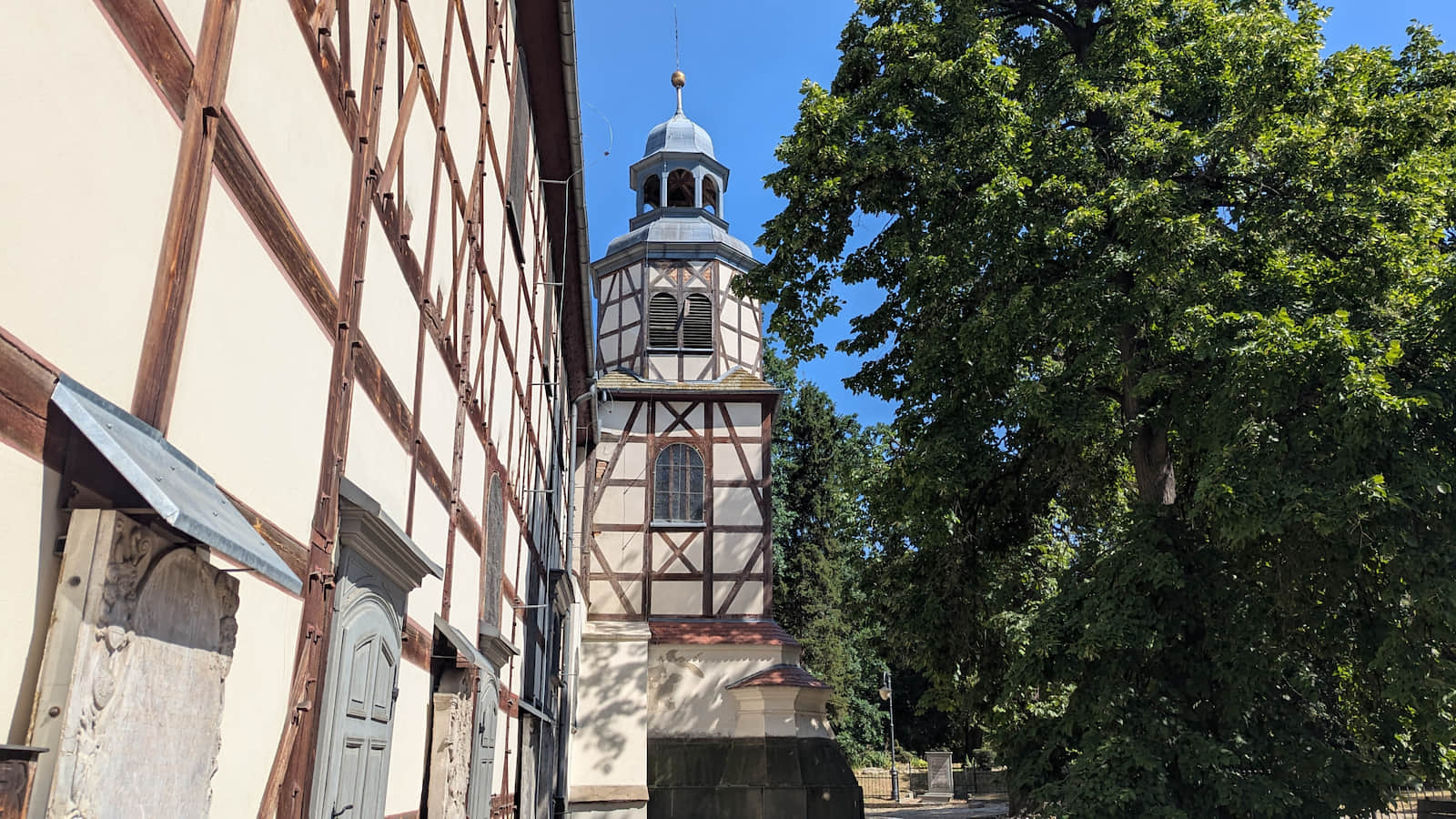
During your visit, you may notice one more unusual feature. The Church of Peace in Jawor has no tall tower, which is common in many European churches. This was not an accident.
The lack of a tower was one of the conditions given to the Protestants by the emperor. The church had to be less visible and could not dominate the town skyline. Today, the lack of a tower is one of the recognizable features of the Churches of Peace.
Jawor - getting there by train
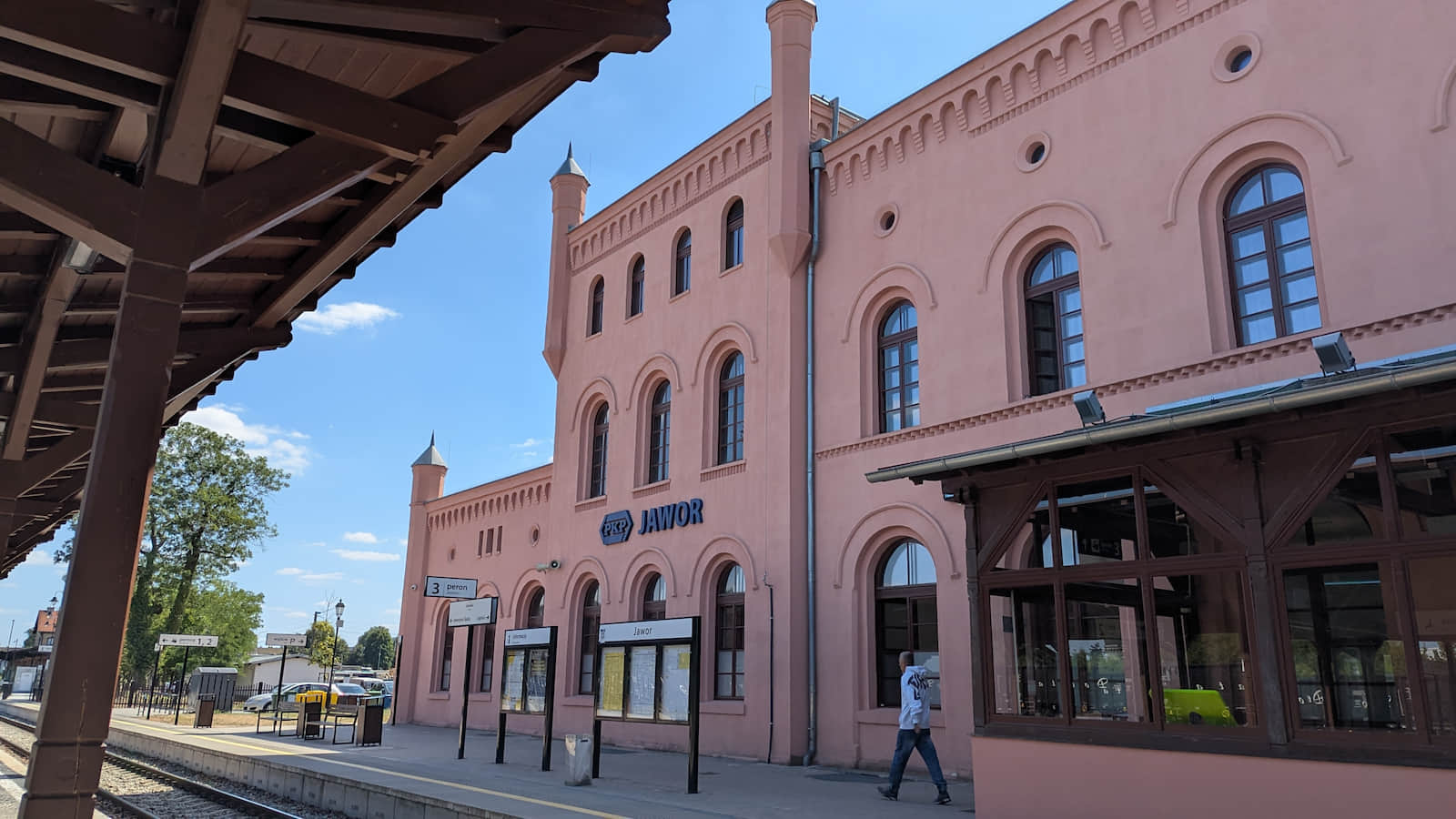
You can reach Jawor by train. From the railway station to the church, it is about a 12-minute walk.
It is easy to get there by train, for example from Legnica. There is a direct connection and the journey takes less than 30 minutes. The church stands a little away from the historic town center because one of the rules for its construction was that it had to be built outside the town walls.
What else to see in Jawor?
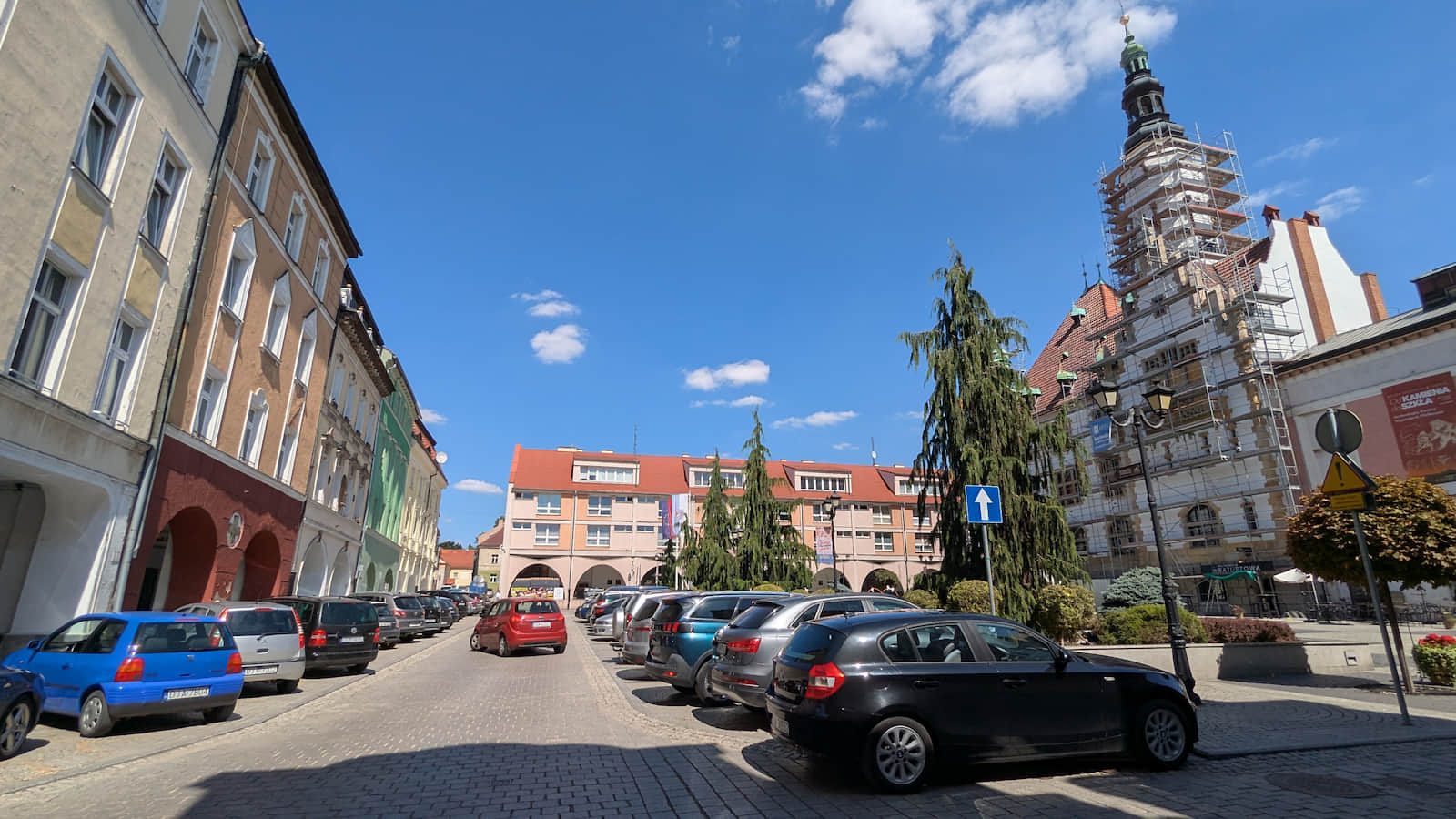
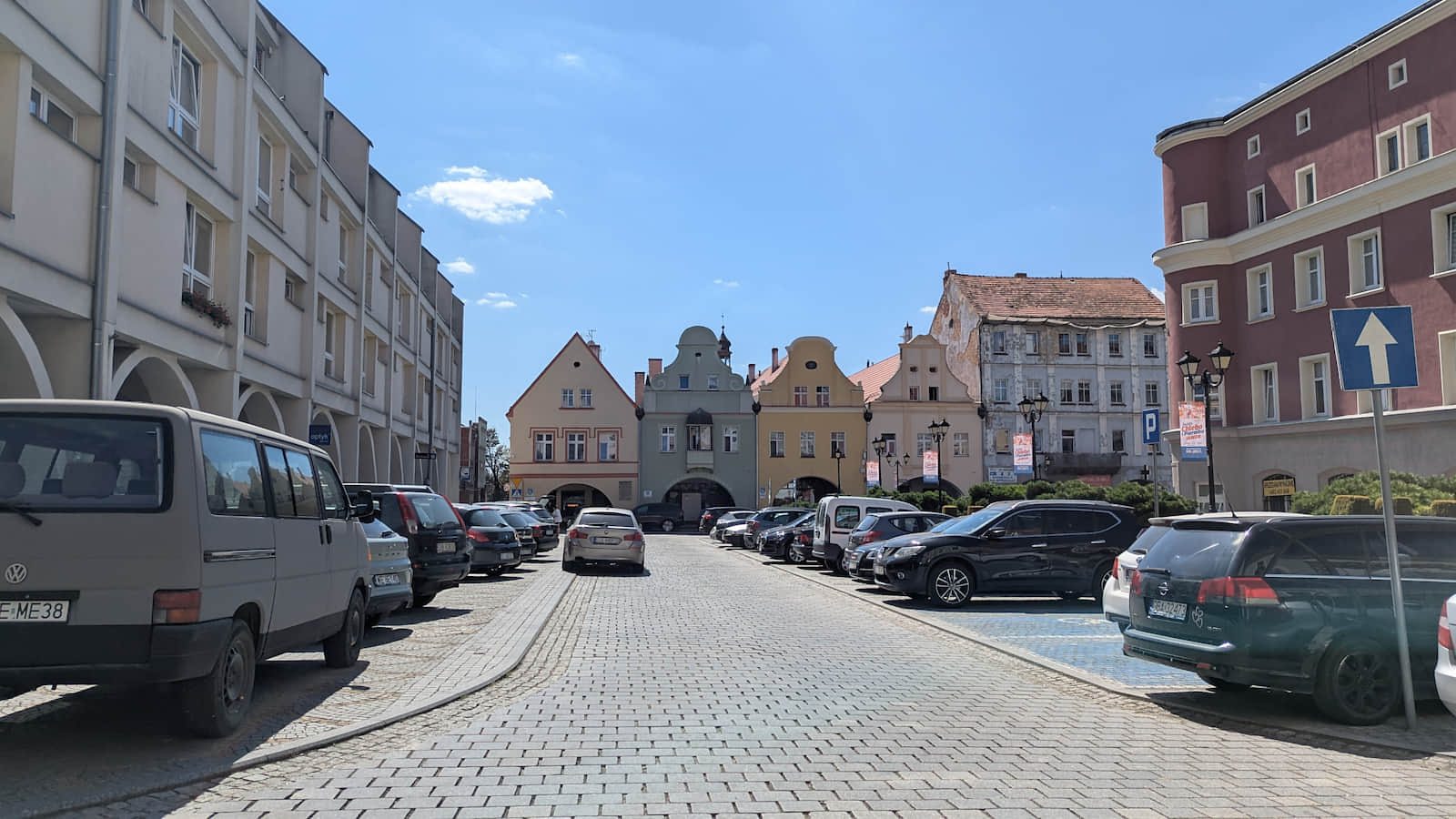
For us, the Church of Peace is clearly the main place to visit in Jawor. The town also has a medieval market square with a town hall, but today much of the square is used as a car park. There is also the Piast Castle, which is slowly being rebuilt and secured.
The medieval market square in Jawor
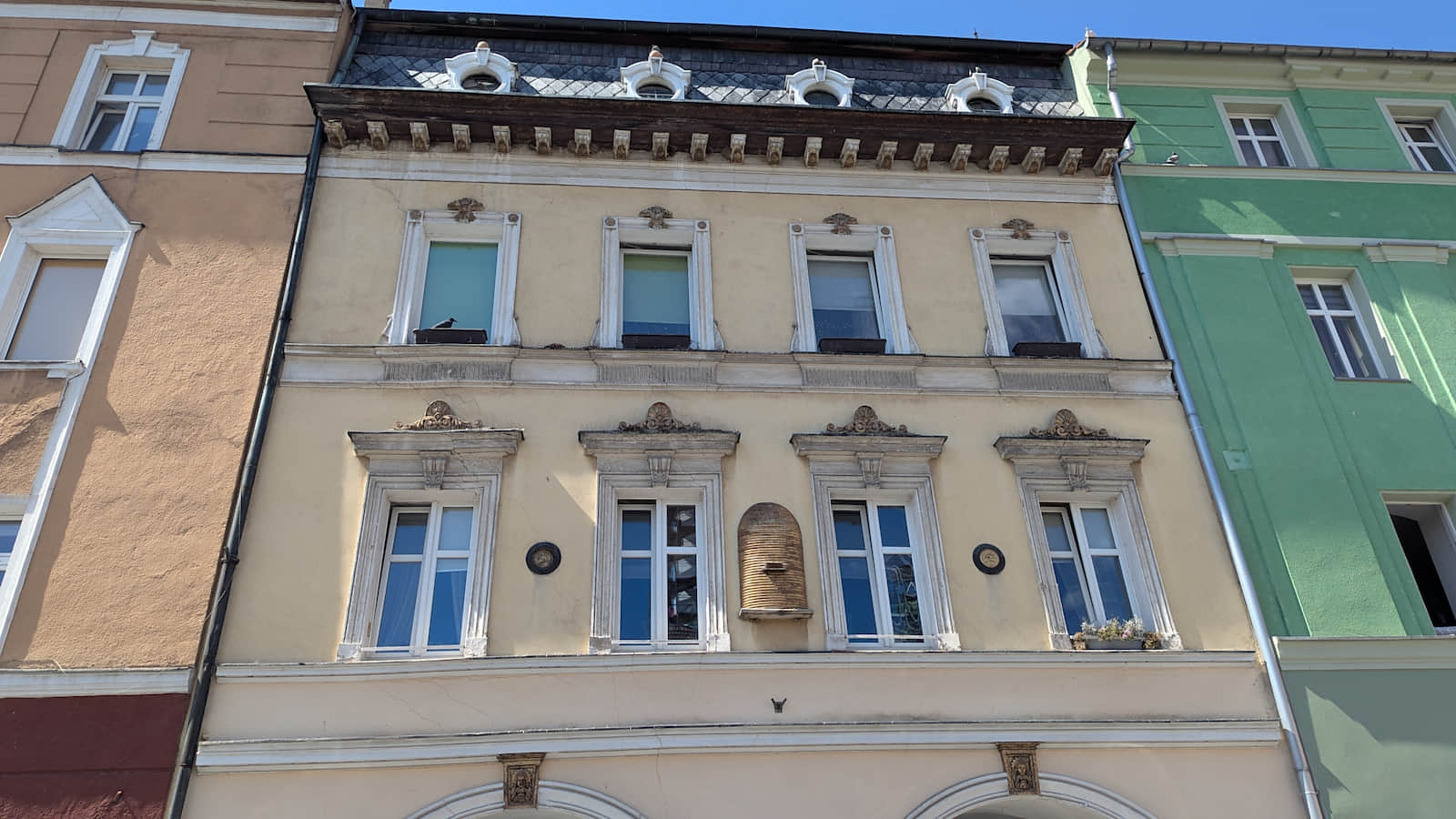
The market square in Jawor is the heart of the historic town center. The oldest buildings are on the southern side of the square, and one of the townhouses has a characteristic bay window. An interesting detail is townhouse number 8, which has a beehive image on its facade. It refers to the famous gingerbread from Jawor, which was one of the town's symbols for many centuries.
Piast Castle in Jawor
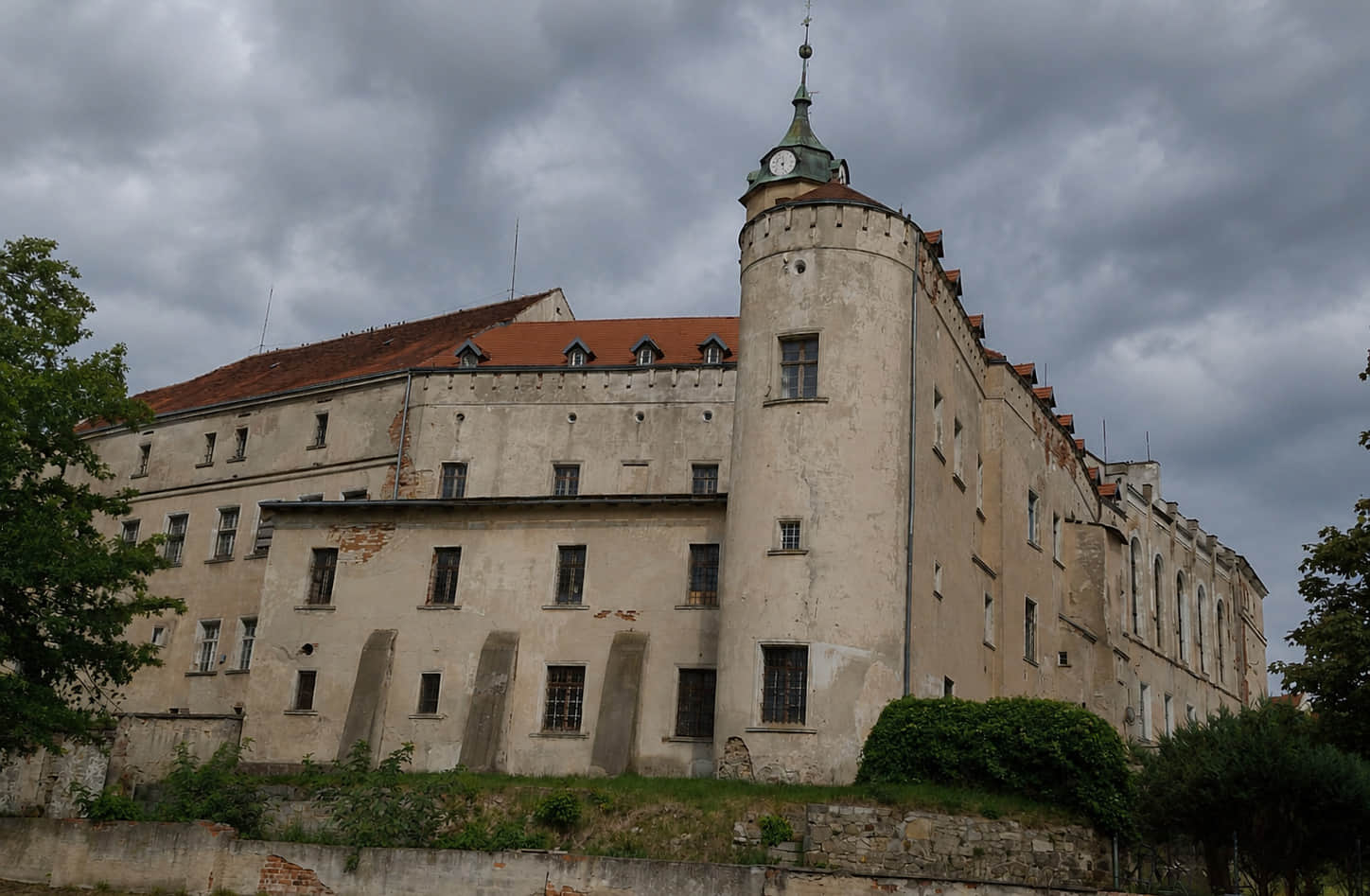
Its history goes back to the 13th century. At first, it was the seat of a local castellan, and later it belonged to the dukes of Jawor. In later centuries, the castle was rebuilt many times, so its present look is a mix of different periods.
The castle also had less glamorous uses. It was used as a prison, and from 1888 to 1945 it was a prison only for women. During World War II, members of the resistance movement from Norway and France were held there. A monument in the castle courtyard reminds visitors of this period.
Today, Piast Castle in Jawor is not fully restored, but you can see its courtyard and parts of the old buildings that have survived. Visitors can also enter the castle tower, where there is a viewing point. The tower is open seasonally, from May to October.
In the attic area, there are exhibitions about the history of the castle and the work of artists from the region. One of them is an exhibition about the Jawor story of Copernicus's manuscript, “On the Revolutions of the Heavenly Spheres.”

Publish Date:
More in the Region Dolnośląskie (Lower Silesian Voivodeship)